

https://www.youtube.com/watch?v=SksFXhX__Lc Summary: Sofa Panel Bed Buying Guide
If you’re researching a sofa panel bed, the source video is extremely short, but the product idea is clear: Murphy Bed Depot presents a combined seating-and-sleeping solution that keeps the bed concealed when it isn’t in use. The original video appears on the Murphy Bed Depot YouTube video, and the linked company site is Murphy Bed Depot. According to Murphy Bed Depot, the featured product is a Sofa Panel Bed available through the company.
Because the transcript contains just one core line and the timestamped clip begins at 00:00, this article does more than restate the listing. As demonstrated in the video, the appeal is simple: your room can function as seating space by day and sleeping space by night without leaving a bed permanently exposed. That’s especially relevant in 2026, when compact apartments, dual-use home offices, and guest rooms still force you to squeeze more function out of every wall.
The creator explains the product at a high level, but the video itself doesn’t walk through dimensions, mattress limits, anchoring, or hardware differences. So this guide fills in those gaps with practical planning advice. You’ll get measurement steps, installation checkpoints, mattress compatibility notes, safety warnings, and a comparison with other Murphy bed types so you can decide whether a sofa panel bed is actually the right fit for your room.
- Source video length context: brief product-focused clip starting at 00:00
- Primary product claim: sofa + hidden bed combination
- Main buying question: can your wall, floor plan, and mattress setup support it safely?
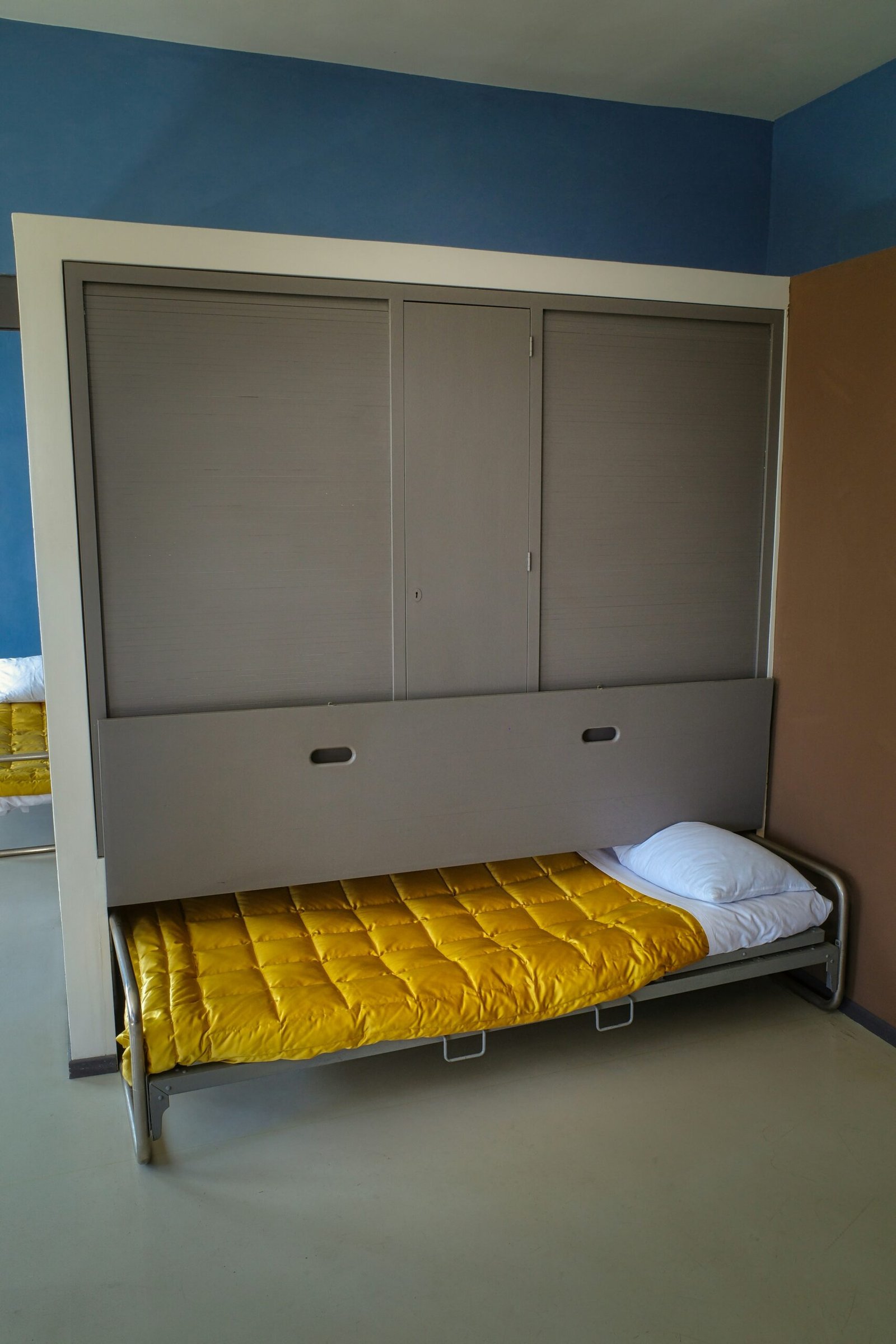
Sofa Panel Bed Key Takeaways
The fastest way to evaluate a sofa panel bed is to focus on three things first: daytime function, open-floor clearance, and safe mounting. If you need permanent seating in a guest room, studio, office, or family flex room, this design can be far more useful than a standard fold-out sofa. You keep a real bed platform and typically a more mattress-friendly sleep surface, while the room still looks finished during the day.
That said, a sofa panel bed only works well if the room can handle the opening arc and the wall can support secure anchoring. In our experience reviewing wall-bed layouts, buyers most often underestimate open projection and walkway loss. A queen Murphy bed commonly projects roughly 80 to inches once open, and closed cabinet depths often land around 16 to inches depending on design. Ceiling height matters too, especially for vertical models, which frequently need around 87 inches or more overall.
Use this quick checklist before you go any further:
- Define the room’s main job: guest room, office, apartment, or media room.
- Choose bed size: twin, full, queen, or horizontal alternative.
- Measure wall width and ceiling height: write both in inches and centimeters.
- Confirm mattress specs: thickness, total weight, and approved type.
- Verify anchoring surface: studs, masonry, or engineered backing.
- Check mechanism type: piston or spring, plus service parts and warranty.
- Price the full project: unit, mattress, shipping, install, and any wall prep.
As demonstrated in the video, the concept is appealing. The real buying decision comes down to fit, load, and layout—not just looks.
How a Sofa Panel Bed Works in a Small Room
A sofa panel bed is a Murphy-style bed that folds vertically into a cabinet or wall-mounted structure while preserving visible seating on the front side. Depending on the model, the sofa may remain in place as the bed opens, or cushions may need to shift slightly before lowering the platform. The key difference from a conventional sleeper sofa is structural: instead of unfolding a mattress from inside the couch, you’re lowering a separate bed platform from the wall.
That difference affects comfort and planning. A standard sleeper sofa often relies on a thinner foldable mattress and a metal support frame, while a Murphy-style unit can support a more conventional mattress within manufacturer limits. That usually improves sleep quality, especially for regular guests. On the other hand, the sofa panel bed needs clear floor space in front of the wall. You’re trading hidden sleeping hardware for a room that must remain open enough to operate.
Where does this work best? Usually in spaces with two clear identities:
- Guest room + office
- Studio apartment + living room
- Vacation home den + sleeping area
- Family room + overflow guest space
We’ve found that layout success depends less on square footage alone and more on obstacle control. Before ordering, measure closed depth, open projection, sofa depth, ceiling height, and side clearance. Leave room for door swings, walking paths, windows, radiators, and ceiling fixtures. A clearance problem of even 2 to inches can turn an otherwise smart purchase into a frustrating one.
According to Murphy Bed Depot, the product centers on combined seating and sleeping. The article’s bigger point is that your room must support both functions without awkward traffic flow once the bed is open.
Comparing Sofa Panel Bed Designs With Other Murphy Bed Types
The video shows one category, not the whole Murphy bed market. That matters because a sofa panel bed isn’t automatically the best answer for every compact room. Traditional wall beds, cabinet beds, and sofa combinations all solve the same problem differently, and your choice should follow your room’s primary daytime use.
Traditional wall beds usually fold into a fixed cabinet or built-in wall unit. They’re often the cleanest-looking option and can include shelving, lighting, and storage, but they nearly always require more committed installation. Cabinet beds are generally more furniture-like and may be easier to relocate, though they still need stable placement and can take up more floor area when closed. Sofa combinations work best when you truly need seating every day and don’t want to drag in a separate couch.
Vertical and horizontal formats add another decision layer. Vertical units usually need more ceiling height and more forward clearance, while horizontal beds can fit under lower ceilings or along walls where vertical height is limited. A horizontal twin or full can be especially useful in bonus rooms and kids’ rooms where the wall is wider than it is tall.
| Type | Daytime Function | Typical Footprint | Install Complexity | Best Room |
| Wall bed | Hidden bed, optional storage | Shallow when closed | High | Guest room, office |
| Cabinet bed | Furniture cabinet | Deeper closed footprint | Moderate | Flex room, rental |
| Sofa panel bed | Permanent seating + hidden bed | Wider sofa frontage | High | Studio, office, den |
The creator explains only the featured product, which is fair for a product clip. But if you’re comparison shopping, this wider lens will save you from choosing a style that solves one problem while creating another.
Room Measurements and Clearance Planning for a Sofa Panel Bed
Measure first. Then measure again. Most Murphy bed buying mistakes trace back to incomplete room data, not bad intentions. For a sofa panel bed, you need to record more than just wall width. Start with six dimensions: wall width, ceiling height, closed depth, open projection, sofa depth, and walkway clearance around the open bed.
- Measure the installation wall from trim edge to trim edge.
- Measure ceiling height in at least spots because older floors can slope.
- Mark the closed cabinet width and depth on the floor with painter’s tape.
- Mark the open bed footprint using the manufacturer’s projected depth.
- Test door swings and outlet access with the taped layout in place.
- Walk the room as if the bed is open and someone is sleeping there.
This step catches practical conflicts you won’t notice on paper. For example, many buyers leave too little path space between the foot of the bed and a dresser. A useful minimum walkway is often around 24 to inches for tight rooms, though more is better. Also check overhead hazards: ceiling fans, pendant lights, low art, and smoke detectors can all become conflict points depending on the opening path.
Don’t rely only on cabinet dimensions. Mattress thickness, bedding, and retaining systems can alter how fully the unit closes. We’ve seen cases where adding just a 2-inch topper changed closure performance enough to require rethinking the mattress. Take wall photos, note baseboard depth, and confirm whether the floor is level. A pre-order packet with dimensions, photos, and wall details will make your conversation with the seller far more productive.

Mattress Thickness, Weight Limits, and Lift Compatibility
Mattress specifications aren’t minor details. They’re central to whether a sofa panel bed closes properly, opens safely, and stays balanced over time. If the mattress is too thick, the face panel or cabinet may not shut correctly. If it’s too heavy, the lift system may feel stubborn on the way up or drop too quickly on the way down. Either problem can shorten hardware life and create a safety issue.
Before buying any replacement mattress, confirm four numbers with Murphy Bed Depot: approved mattress size, maximum thickness, acceptable total weight range, and bedding allowance. Piston and spring systems are usually calibrated around a target load band rather than any mattress that happens to fit the platform. As a rough market reality, many Murphy beds accept mattresses in the 8- to 12-inch range, but that range varies by model and should never be assumed.
Also ask whether the hardware permits memory foam, hybrid, innerspring, or latex construction. Some models need mattress straps or retainers to hold the mattress and bedding in place when the bed is upright. In our experience, the easiest mistake is forgetting that a heavier hybrid can add 20 to pounds over a simpler foam mattress of the same size.
After installation, perform a controlled test:
- Open the bed slowly with no one on it.
- Watch for binding, twisting, or uneven descent.
- Close it gently and confirm the panel seats properly.
- Stop immediately if the bed drops fast or resists abnormally.
As demonstrated in the video, the product is straightforward in concept. The underlying hardware is not. Never exceed the manufacturer’s stated weight limit just because the mattress physically fits.
Installation, Wall Anchoring, and Operating Safety
A Murphy bed is moving furniture under load, not just decorative cabinetry. That’s why proper anchoring matters so much. The cabinet or frame should be fastened to suitable structural material such as properly located wall studs, masonry with approved hardware, or another engineered backing system specified by the manufacturer. Drywall anchors alone are not a safe substitute for structural attachment.
A solid installation sequence usually looks like this:
- Locate studs and verify spacing.
- Check floor and wall level with a long level.
- Assemble the cabinet or frame square and plumb.
- Secure the unit structurally before attaching moving parts.
- Install lift hardware exactly as instructed.
- Attach the bed platform and test movement empty first.
- Retorque fasteners after initial cycling.
Plan on using a stud finder, tape measure, drill, driver, socket set, clamps, safety glasses, and a second adult. For most queen-size or sofa-front units, having two people isn’t optional; it’s safer and more accurate. If the wall is masonry, the studs are irregular, or the load path is unclear, hire a qualified installer. Paying for professional help is often cheaper than repairing wall failure or damaged hardware later.
During operation, check for pinch points, loose fasteners, uneven movement, damaged pistons or springs, and any tendency for accidental opening. According to Murphy Bed Depot, the video is product-focused, not an installation tutorial. So treat the product page and manufacturer instructions as the controlling technical reference, and don’t improvise when anchoring decisions are involved.

Piston Versus Spring Murphy Bed Hardware
The two most common counterbalance systems are piston and spring hardware. Both are designed to offset mattress and platform weight, but they behave differently over time and under changing loads. If you’re choosing a sofa panel bed, don’t judge hardware only by how smooth it feels in a showroom or demo clip. Balance range, serviceability, replacement parts, and warranty support matter just as much.
Piston systems use gas struts or similar cylinders. They’re often enclosed, visually tidy, and known for controlled motion. Spring systems use tensioned coils to counterbalance the bed and may offer more mechanical adjustability, but they require careful setup and should never be casually re-tensioned without instructions. A system that’s tuned for one mattress weight may behave poorly when you switch to a heavier one later.
Use this troubleshooting checklist if something feels off:
- Hard to lift: mattress may exceed the rated load, or balance may be set too light.
- Drops quickly: worn pistons, weak springs, or incorrect adjustment.
- Twists or binds: uneven installation, out-of-square frame, or damaged hardware.
- Won’t stay closed: closure alignment or retention issue.
Ask about expected service life, part availability, and warranty coverage. Some hardware lines are easier to replace than others, and lead times can matter if a part fails. The creator explains the featured product only briefly, so your smartest next step is to request model-specific hardware details before ordering. Never modify springs or substitute generic pistons just because dimensions appear similar.
DIY Murphy Bed Construction: Plans, Tools, and Tradeoffs
If you’re an experienced woodworker, building your own wall bed can be tempting. A DIY project may let you customize width, finish, trim, and storage. But a commercial sofa panel bed still offers one big advantage: the engineering has already been worked out around the hardware, the panel geometry, and the intended mattress range. That reduces guesswork where guesswork is most risky.
A typical DIY materials list includes cabinet-grade plywood, hardwood edging, structural cleats, bed platform components, upholstery or sofa framing, fasteners, brackets, and a compatible lift kit. Core tools usually include a table saw or guided circular saw, drill, impact driver, clamps, router, sander, square, stud finder, level, and protective gear. If you don’t already own these tools, the savings gap narrows quickly.
A practical build sequence looks like this:
- Finalize room measurements and wall conditions.
- Choose mattress size and exact hardware kit.
- Build and square the cabinet.
- Construct the bed frame to kit tolerances.
- Install the mechanism exactly to plan.
- Build the sofa section and verify open-bed interference.
- Anchor the assembly structurally.
- Test under supervision before normal use.
The most common DIY failures are inaccurate tolerances, weak anchoring, mismatched lift capacity, and sofa framing that interferes with motion. In our experience, the safest path is a tested kit or manufacturer-approved plan—not an improvised counterbalance using unrelated springs or salvage pistons. A Murphy bed isn’t the place to wing it.

Buying Checklist for Sofa Comfort, Finish, Price, and Support
Don’t evaluate a sofa panel bed only as a bed. If the sofa is the part you’ll use 300-plus days a year, it deserves equal scrutiny. Check seat depth, cushion firmness, back support, upholstery durability, and whether the sofa must be cleared before opening the bed. A room-saving design loses appeal fast if you have to remove five pillows and move a coffee table every night.
Ask the seller for a full specification sheet covering:
- Assembled dimensions and open dimensions
- Approved mattress requirements
- Cabinet materials and finish options
- Hardware type and replacement-part support
- Anchoring instructions and installer guidance
- Shipping method, lead time, and box count
- Warranty terms and exclusions
- Installation services if available
Total project cost often includes more than the unit itself. Budget for the mattress, delivery, assembly, wall reinforcement, trim work, and possibly electrical relocation if outlets or switches sit behind the cabinet. Request finish samples or real-world product photos in natural light because screens can shift wood tones and fabric colors dramatically.
According to Murphy Bed Depot, the product page linked from the video is the right starting point for current availability. Use that page to verify model-specific details, then confirm everything in writing before you buy. A little paperwork upfront can prevent expensive assumptions later.
What YouTube, Google, and Privacy Settings Have to Do With the Video
When you watch the Murphy Bed Depot clip on YouTube, you’re not only interacting with a furniture video. You’re also using a platform operated through Google services, and that can involve sign in prompts, cookies, and the processing of technical data such as IP addresses. Those platform functions help deliver the video and support related systems, but they’re separate from the physical product specs of the sofa panel bed itself.
YouTube and Google LLC may use data tied to audience engagement, site statistics, personalized content, personalized ads, non-personalized content, and video recommendations. That activity can influence what appears on your YouTube homepage, in YouTube search results, and within your search history. Your privacy settings can affect some of those outcomes, including personalization and advertising controls.
Platform-level processing can also support spam protection, fraud prevention, and service outage tracking. None of that changes the bed’s mattress limit or mounting method, but it does matter if you want to understand what happens around the video environment. For official policies, readers should review YouTube privacy information, YouTube Terms of Service, YouTube copyright resources, and guidance pages for YouTube creators and YouTube developers.
- YouTube Terms of Service
- YouTube privacy information
- YouTube copyright guidance
- YouTube creators
- YouTube developers
As demonstrated in the video, the product claim itself comes from Murphy Bed Depot and its linked website—not from Google or YouTube.

Should You Buy a Sofa Panel Bed? Final Planning Steps
A sofa panel bed makes sense when you need a room to do two jobs well and you’re willing to plan around measurements, hardware, and installation. The biggest upside is obvious: you get real daytime seating and a concealed bed without turning the room into a permanent bedroom. For guest rooms, offices, studios, and vacation spaces, that can be a meaningful quality-of-life upgrade.
Still, the product is only a good choice if your room passes three tests. First, the wall must support proper anchoring. Second, the floor plan must allow the bed to open without blocking circulation, doors, or fixtures. Third, the mattress must stay within the approved thickness and weight range for the specific hardware. If any of those fail, another Murphy bed style—or even a conventional sleeper sofa—may be the smarter buy.
Here’s the best next-step sequence:
- Watch the original Murphy Bed Depot video for the baseline product context.
- Visit the product website and request full technical specs.
- Measure your room with tape on the floor, not guesswork.
- Confirm mattress and mechanism compatibility before purchase.
- Decide on DIY versus professional installation based on wall conditions.
The creator explains the concept simply, and that simplicity is part of the appeal. Your job is to add the planning discipline the short video doesn’t cover. Do that, and you’ll know whether this space-saving setup is a clever solution or a tight squeeze waiting to happen.
Key Takeaways
- A sofa panel bed works best when you need both permanent seating and a concealed bed in the same room.
- Before buying, confirm wall width, ceiling height, open-floor clearance, mattress thickness, total weight, and anchoring requirements.
- Piston and spring hardware must match the mattress load range; never assume any mattress that fits the frame is safe to use.
- Professional installation is worth considering when wall conditions, load paths, or hardware adjustments are unclear.
- Use the original Murphy Bed Depot video and website as the starting point, then verify all model-specific details in writing before ordering.
Frequently Asked Questions
What is a sofa panel bed?
A sofa panel bed is a Murphy-style bed that combines a fold-down sleeping platform with a sofa or integrated seating panel for daytime use. Instead of pulling a mattress out of the couch, the bed lowers from a wall or cabinet structure while the seating remains part of the front-facing design.
Is a sofa panel bed comfortable?
It can be, but comfort depends on two separate things: the mattress for sleeping and the sofa cushions for sitting. You should verify the exact mattress specifications, support platform design, cushion firmness, and whether the unit is meant for frequent overnight use or occasional guests.
Do Murphy beds need to be attached to the wall?
Most Murphy bed designs require secure anchoring for stability and safe operation. The exact mounting method depends on the cabinet design, wall construction, and manufacturer instructions, but drywall anchors alone are generally not sufficient for a moving bed assembly.
Can you use any mattress in a Murphy bed?
No. Mattress length, width, thickness, and total weight usually need to stay within the hardware’s approved range. A mattress that is too thick may prevent proper closure, and one that is too heavy can throw off the lift mechanism and create safety issues.
How much clearance does a Murphy sofa bed need?
Use the manufacturer’s open-depth measurement as your baseline, then add practical walking space around the bed. You also need to account for doors, furniture, outlets, bedding, and any obstructions such as radiators, windows, or ceiling fixtures.
Are DIY Murphy beds safe?
They can be safe when built with tested hardware, accurate dimensions, structural anchoring, and careful setup. Problems usually happen when builders improvise the counterbalance system, miss weight limits, or fail to attach the unit properly to the wall structure.
What is the difference between a Murphy bed and a sofa bed?
A Murphy bed folds vertically or horizontally into a wall cabinet or frame, while a sofa bed converts by unfolding or pulling out a sleeping surface from within the couch. In many cases, a Murphy bed allows a more conventional mattress, while a sofa bed often prioritizes furniture simplicity over mattress depth.