

TL;DR: Key Takeaways From the Murphy Bed With Desk Video
A Murphy bed with desk is one of the most practical ways to turn a spare room into a home office bedroom combo without giving up the floor permanently. In the short product showcase, JULEI HARDWARE MANUFACTORY demonstrates a knock-down vertical open hidden folding wall bed with an integrated desk, listed as model DJ WDK01.
According to JULEI HARDWARE MANUFACTORY, the product is available in twin, full, and queen versions. The video is not a step-by-step DIY Murphy bed tutorial; it’s a brief manufacturer showcase, with the transcript mainly sharing contact details: Tel: +86-18902892513, Email: Sales1@fsjulei.com, and http://www.fsjulei.com/. That makes planning even more important for buyers, because you’ll need to request the exact specifications before ordering.
The big decisions come before you ever open a tool box. You need to choose the bed size, decide between a vertical Murphy bed and a horizontal Murphy bed, confirm mattress thickness, plan wall anchoring, check cabinet frame depth, and make sure the desk clears the floor, bedding, outlets, baseboards, and chair.
- Best use case: small apartment design, guest rooms, studios, student rooms, and office-bedroom hybrids.
- Main safety issue: the cabinet must be anchored into structural framing, masonry, or approved backing — never drywall alone.
- Main buying issue: verify hardware ratings, mattress range, and installation drawings before paying.
- Main layout issue: measure both the closed cabinet footprint and the full bed projection when open.
What the JULEI Hardware Murphy Bed With Desk Shows
The video shows a product identified in the title as the DJ WDK01, a knock-down style twin/full/queen vertical open hidden folding Murphy bed with desk. As demonstrated in the video, this is a manufactured wall bed system rather than a simple freestanding desk or sofa bed. The key idea is that the bed stores upright in a cabinet frame, while the desk remains part of the working face of the unit.
Knock-down style usually means the furniture ships flat-packed or partially disassembled, then gets assembled on-site using supplied fittings, bolts, hinges, and specialized Murphy bed hardware. In furniture manufacturing, this format reduces shipping volume and can make international delivery more practical. It also means your installer must follow the drawings carefully; one reversed bracket or misplaced pivot point can affect how the bed balances.
A Murphy bed, also called a wall bed or fold-down bed, stores vertically or horizontally when not in use. The JULEI product title names twin Murphy bed, full Murphy bed, and queen Murphy bed options. A queen model is the most comfortable for adult guests, but it also asks more from the wall: more width, more weight, more open-floor projection, and stronger anchoring.
Before buying, contact the manufacturer through the details shown in the video description and ask for the boring but critical documents: load ratings, compatible mattress thickness, cabinet dimensions, desk load capacity, installation manual, finish options, and replacement part information. We’ve seen buyers skip this step and later discover that a 13-inch mattress or thick duvet prevents the bed from closing cleanly.
How a Vertical Murphy Bed With Desk Saves Space
A vertical Murphy bed with desk is useful when the room has enough ceiling height but limited usable floor area. Most standard bedrooms have ceilings around 8 feet, and many vertical wall beds fit comfortably in that range, although exact cabinet height varies by manufacturer and bed size. The advantage is simple: the mattress footprint disappears into the wall cabinet when you’re working, exercising, or using the room for storage.
Compared with a horizontal Murphy bed, a vertical model needs more height and less wall width. A horizontal Murphy bed works better under windows, in attic rooms with sloped ceilings, or in spaces where a wide wall is available but height is limited. A vertical queen Murphy bed may need roughly 64 to inches of wall width depending on cabinet side panels and trim, while a twin version may need closer to 43 to inches. Always use the manufacturer’s final cut sheet, not a guess.
The desk makes the system more useful than a standard fold-down bed. With a typical wall bed, the cabinet front is just a panel. With a Murphy bed with desk, the front becomes a daily work surface for a laptop, monitor, craft materials, or student supplies. The best setups let you close the desk zone neatly and open the bed without removing everything from the room.
Measure before you buy. Use painter’s tape on the floor and wall to mark:
- Wall width: include side trim, shelving, switches, and outlets.
- Ceiling height: check at several points if the floor is uneven.
- Open bed projection: allow the full mattress length plus walking space.
- Desk depth and chair storage: confirm where the chair goes when the bed opens.
- Door swing and wardrobes: don’t trap a closet or block the room entry.
Murphy Bed Hardware: Lift Systems, Frames, and Balance
The clean cabinet appearance in the JULEI Hardware video can make the product look simple, but every safe wall bed depends on the hardware behind the panel. The main parts to ask about are the lift system, pivot plates, hinges, legs, stop brackets, desk linkage hardware, and cabinet frame connectors. If those parts aren’t rated for your bed size and mattress weight, the bed may feel too heavy, drop too quickly, or refuse to stay closed.
Most Murphy bed hardware uses either a piston lift mechanism or a spring lift mechanism. Piston systems are often compact and pre-tensioned, which can make them easier for packaged furniture systems. Spring systems can be adjustable, which is useful when mattress weight varies, but they require careful balancing. In both cases, the counterbalance system offsets the combined weight of the mattress, bed panel, and sometimes the desk assembly.
For buyers comparing a prebuilt unit with a Murphy bed kit, hardware verification should be treated like a checklist, not an afterthought. Ask the seller for:
- Rated bed size: twin, full, queen, or multiple sizes.
- Mattress weight range: too light or too heavy can affect operation.
- Maximum mattress thickness: many wall beds accept around to inches, but confirm the exact model.
- Cabinet material compatibility: plywood construction, MDF, laminated panels, or metal cabinet frames.
- Replacement parts: pistons, springs, pivots, hinges, and desk linkage parts should be available later.
In our experience, the best installations happen when the cabinet frame is built square first, the lift hardware is installed exactly to the template, and the mattress is added only after the empty bed panel has been tested slowly several times.
Wall Anchoring Safety Checklist for Murphy Beds
The wall bed shown by JULEI HARDWARE MANUFACTORY must be anchored correctly. A Murphy bed is tall, heavy furniture with moving parts, and anti-tip safety is non-negotiable. Even a compact twin Murphy bed can place serious force on the top of the cabinet when the bed opens; a queen Murphy bed with desk can weigh far more once you include panels, hardware, mattress, and desk structure.
For typical wood-framed drywall walls, use stud mounting. Locate studs with a stud finder, then confirm with a small test hole, a magnet, or by checking outlet box placement. Fasten through the cabinet frame or specified mounting rail into studs using manufacturer-approved screws or lag bolts. Drywall anchors alone are not enough for a fold-down bed because drywall is a surface material, not structural support.
Masonry walls need a different method. For solid concrete, use anchors rated for concrete. For brick, avoid weak mortar joints where possible and match the anchor to the brick type. Hollow block may need sleeve anchors, toggle-style masonry fasteners, or professional evaluation. Metal framing is also different: standard wood lag screws are not appropriate, and you may need toggles, blocking, engineered fasteners, or reinforcement.
Use this safety checklist before sleeping on the bed:
- Verify level and plumb: the cabinet must not lean forward or twist.
- Attach every bracket: don’t skip hidden brackets because the unit feels sturdy.
- Test slow movement: open and close the bed without bedding first.
- Check desk clearance: confirm the desk clears the floor, bedding, and stored chair.
- Re-tighten fasteners: inspect after the first week, then periodically after seasonal humidity changes.
Mattress, Bedding, and Clearance Rules Before You Buy
A Murphy bed with desk only works well if the mattress fits the cabinet depth and the lift system weight range. A mattress that is too thick can press against the cabinet face, stop the door from closing, or crush bedding. A mattress that is too heavy can make the fold-down bed hard to raise; one that is too light may not help the counterbalance system operate as intended.
Choose the size based on who will sleep there and how often. A twin Murphy bed works for narrow rooms, children, students, and occasional single guests. A full bed is a practical compromise for compact guest rooms because it gives more width than a twin without the footprint of a queen. A queen Murphy bed is best for adult guests, couples, or primary sleeping use, but it demands the most wall width and open-floor clearance.
Many wall bed systems require mattresses around 8 to inches thick, but don’t assume that range applies to DJ WDK01. Ask JULEI for the exact maximum mattress thickness and weight range. Also ask whether memory foam, innerspring, hybrid, or latex mattresses are recommended. Some lift systems behave differently with dense foam because a 10-inch foam mattress can weigh more than a thinner innerspring model.
Bedding straps are small but useful. They hold sheets, blankets, and sometimes a thin duvet in place when the bed closes vertically. For best results, use low-profile pillows stored separately and avoid bulky comforters unless the cabinet depth allows them.
Before ordering, measure ceiling height, cabinet projection, bed length when open, side walking space, desk swing path, chair placement, outlets, task lighting, baseboards, HVAC vents, wardrobes, and door swings. A useful rule is to leave at least 24 inches of walking space on one side if possible, with more room at the foot when guests need to move around luggage.
DIY Murphy Bed Kit vs Prebuilt Murphy Bed: Realistic Cost Breakdown
The JULEI Hardware video showcases a manufactured Murphy bed with desk, but many readers compare that option with a DIY Murphy bed or a Murphy bed kit. The cheaper route is not always cheaper once you count hardware, sheet goods, finishing supplies, delivery, mistakes, and tools you don’t already own.
DIY costs usually include Murphy bed hardware, plywood construction or cabinet panels, lumber, edge banding, screws, handles, paint or laminate, lighting, sandpaper, saw blades, clamps, and possibly professional installation. A simple hardware-only kit may look affordable, but quality plywood sheets, finish materials, and tool rental can quickly add hundreds of dollars. Prebuilt systems cost more upfront, but they often include factory-cut panels, matching desk linkage, consistent finish, and fewer measurement errors.
| Option | Typical Cost Range | Skill Level | Best For |
|---|---|---|---|
| Budget DIY hardware build | $700–$1,500+ | Advanced beginner to intermediate | Tool owners comfortable with measuring and stud mounting |
| Midrange Murphy bed kit | $1,200–$2,500+ | Intermediate | Buyers who want hardware and partial structure included |
| Custom cabinet build | $2,500–$6,000+ | Professional | Built-ins, exact finishes, storage walls, unusual rooms |
| Manufactured Murphy bed with desk | $1,800–$5,000+ before shipping/import variables | Installer recommended | Clean fit, integrated desk, factory design |
If you learn from YouTube before building, compare tutorials by skill level, not views alone. Beginner videos are best for understanding layout and terminology. Intermediate Murphy bed kit videos help with cabinet frame sequencing and lift hardware. Advanced cabinetmaking videos are useful for flush reveals, edge banding, scribing to walls, and adding Murphy bed with storage components. Expect a careful DIY project to take one full weekend to several weeks, depending on finishing and wall conditions.
DIY makes sense when you can measure accurately, cut square panels, mount into studs or masonry, and troubleshoot alignment. Choose prebuilt or professional installation for renters, heavy queen units, metal framing, masonry uncertainty, or rooms where the bed will be used every night.
Common Murphy Bed Installation Mistakes to Avoid
The product in the video looks neat and controlled, but the final result only looks simple when the installation is accurate. The most common serious mistake is anchoring into drywall only. A fold-down bed creates moving loads, and the cabinet needs structural support through studs, masonry, blocking, or approved wall reinforcement.
Misalignment is the next big problem. If the cabinet frame is not square, level, and plumb, the bed panel may rub one side, the desk may not sit flat, and the unit may close unevenly. We’ve tested cabinet assemblies where a difference of less than 1/4 inch across the diagonals caused visible rubbing at the front panel. That’s why you should measure diagonals before final fastening, not after the bed is fully loaded.
Sagging usually comes from undersized plywood, weak fasteners, unsupported cabinet sides, the wrong mattress weight, or hardware installed at incorrect pivot points. Squeaking often points to loose fasteners, shifting panels, or hinges under uneven stress. Binding can happen when baseboards push the cabinet out of plumb or when flooring slopes under one side.
Use this prevention sequence:
- Dry-fit the parts: confirm all panels and hardware are present.
- Mark studs or masonry anchor points: verify locations twice.
- Pre-drill accurately: angled holes can pull brackets out of alignment.
- Install the cabinet frame first: check level, plumb, and diagonals.
- Test the lift without bedding: open and close slowly several times.
- Add the mattress and retest: listen for rubbing, squeaks, and uneven resistance.
Don’t rush the last percent. The adjustment stage is where a Murphy bed with desk goes from “it technically opens” to “it feels safe and smooth.”
Best Room Ideas for a Murphy Bed With Desk
A Murphy bed with desk fits best in rooms that must do two jobs. In a small apartment design, the same wall can support work during the day and sleep at night. In a guest room, the bed may stay closed for or more days a year while the desk remains useful for bills, remote work, sewing, studying, or hobbies.
For a guest office, place the desk near outlets and task lighting. If you use a monitor, check whether it must be removed before the bed opens. Keep the chair on casters if the floor is hard, or choose a lightweight chair that can slide into a closet. Wall-mounted shelves can work well, but keep them outside the bed swing zone and far enough from pillows when the mattress is open.
Compare related space-saving furniture before committing. A Murphy bed with sofa is better for lounge-focused rooms where you watch TV or host guests. A Murphy bed with storage is useful when you need linen cabinets, clothing drawers, or bookcases. A standard wall bed cabinet is simpler if you don’t need a desk and want fewer moving parts.
Renters need extra caution. Many Murphy beds require permanent anchoring, which may violate lease rules without written permission. If wall mounting is restricted, consider renter-friendly alternatives such as freestanding daybeds, sofa beds, trundle beds, folding desks, loft beds, storage beds, or non-permanent wall-bed-style units. They won’t disappear as cleanly as a real fold-down bed, but they avoid drilling into walls you don’t own.
Final Buying and Planning Advice for a Murphy Bed With Desk
The smartest next step is to treat the JULEI video as a product preview, then build your own project file before you order. Save the original YouTube video, visit the JULEI HARDWARE MANUFACTORY channel, and request written specifications from JULEI’s website. The video demonstrates the core idea well: one wall can hold a bed, a desk, and a cleaner daily layout.
Your action plan should be simple and practical. First, measure the room with the bed open and closed. Second, confirm whether your wall is wood studs, masonry, metal framing, or something else. Third, choose twin, full, or queen based on sleepers and floor clearance. Fourth, verify mattress thickness and weight before buying the mattress. Fifth, decide whether you have the tools and skill for a DIY Murphy bed kit or whether a prebuilt unit with professional installation is safer.
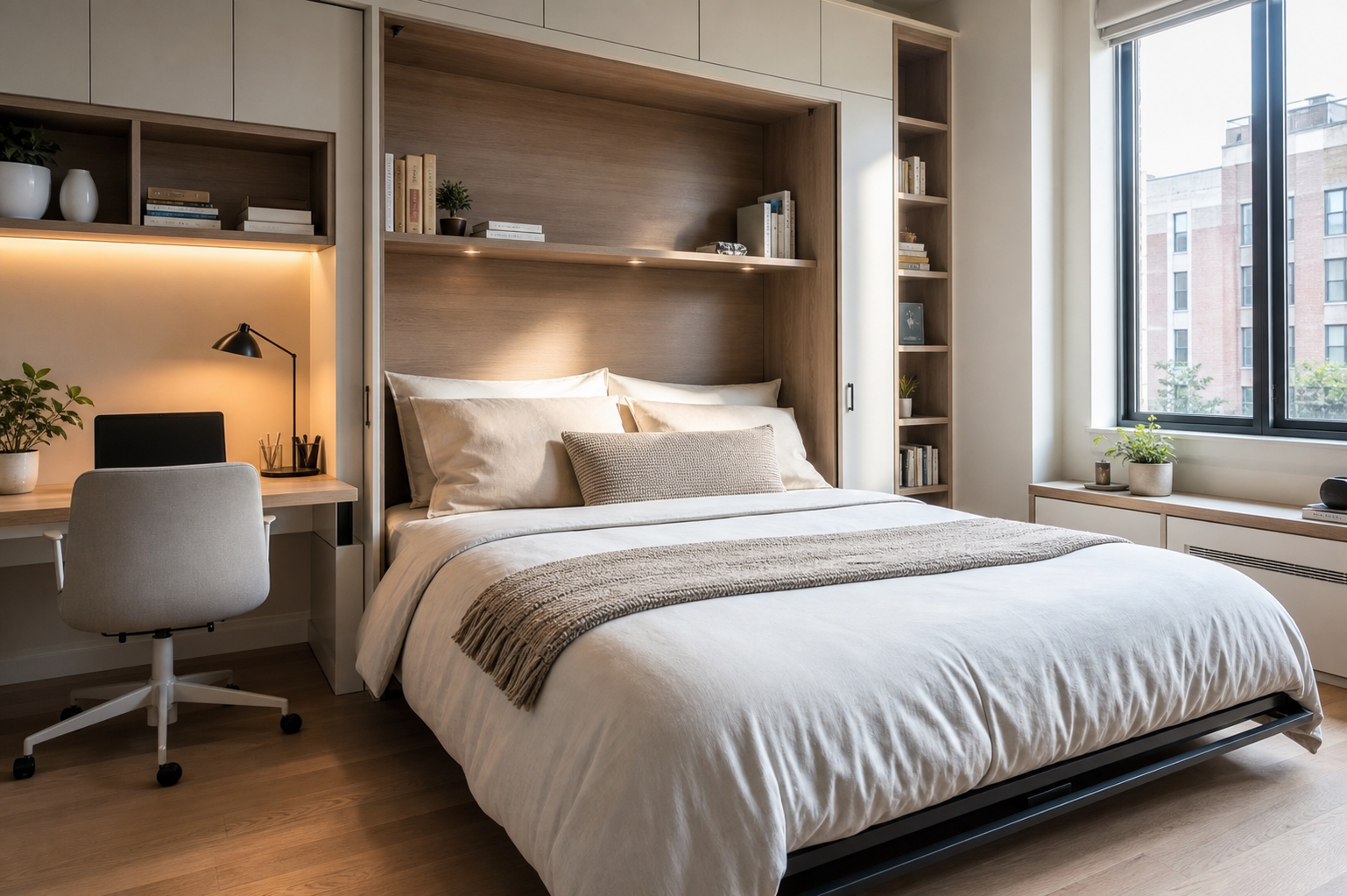
If you’re working with a small apartment, guest office, or multipurpose spare bedroom, a Murphy bed with desk can be excellent space-saving furniture. Just don’t buy on appearance alone. The cabinet finish matters, but the wall anchoring, counterbalance system, cabinet frame, mattress fit, and desk clearance matter more.
Key Takeaways
- The JULEI HARDWARE MANUFACTORY video demonstrates the DJ WDK01, a knock-down vertical Murphy bed with desk available in twin, full, and queen sizes.
- Wall anchoring is the most important safety step; attach the cabinet to studs, masonry, or approved structural backing, not drywall alone.
- Before buying, confirm mattress thickness, mattress weight range, cabinet depth, lift hardware type, desk clearance, and installation drawings.
- DIY can save money if you have tools and carpentry skill, but prebuilt or professional installation is safer for heavy queen units, renters, and complex wall types.
- A Murphy bed with desk works best in small apartments, guest offices, studios, and multipurpose rooms where one space must support both work and sleep.
Frequently Asked Questions
What is a Murphy bed with desk?
A Murphy bed with desk is a wall bed or fold-down bed integrated with a work surface. The model demonstrated by JULEI HARDWARE MANUFACTORY stores the bed vertically in a cabinet frame while providing a desk function for a home office bedroom combo.
Are Murphy beds safe?
Murphy beds can be safe when installed with correct wall anchoring, balanced lift hardware, and manufacturer-approved fasteners. The cabinet should be attached to studs, masonry, or approved structural backing — never drywall alone.
Can you build a DIY Murphy bed with desk?
Yes, but it requires strong measuring, accurate cabinet frame construction, compatible Murphy bed hardware, and careful wall mounting. A Murphy bed kit can simplify the hardware side, but the desk linkage and alignment still require patience and carpentry skill.
What mattress thickness works for a Murphy bed?
You must confirm the manufacturer’s specification for the exact model. Many wall beds use mattresses around to inches thick, but the mattress must also fall within the lift system’s weight range and fit inside the cabinet with bedding.
Is a vertical or horizontal Murphy bed better?
A vertical Murphy bed is usually better for standard-height rooms with narrower walls. A horizontal Murphy bed works better under windows, low ceilings, sloped walls, or rooms with more wall width than height.
Can renters install a Murphy bed?
Many Murphy beds require permanent wall anchoring, so renters should get written landlord permission before installation. If drilling is not allowed, consider a sofa bed, daybed, trundle bed, loft bed, folding desk, or another non-permanent space-saving option.