
Introduction: Finding the Right Custom Murphy Bed Store
If you’re asking, How can I locate a store that specializes in custom murphy beds?, the best path is to combine local showroom searches, cabinetmaker referrals, review verification, and an in-home measurement consultation before you put down a deposit.
You’re probably not looking for a generic wall bed that feels bolted onto the room as an afterthought. You need a space-saving bed solution that fits a guest room, studio apartment, home office, rental property, or multipurpose room without ruining the flow of the space.
Based on our research into store types, showroom practices, customer review patterns, and manufacturer guidance, the strongest custom Murphy bed providers usually do four things well: they measure accurately, explain wall anchoring clearly, show real completed projects, and provide written warranty terms. That matters because a Murphy bed is both furniture and a moving mechanical system.
In 2026, custom wall bed buyers should expect to compare local furniture stores, custom cabinetry shops, closet companies, millwork studios, and dedicated Murphy bed showrooms. We analyzed guidance from the U.S. Consumer Product Safety Commission, business complaint resources from the Better Business Bureau, and design planning standards from the National Kitchen & Bath Association to identify what separates a safe, durable installation from a risky one.


How can I locate a store that specializes in custom murphy beds? Start With These Proven Steps
How can I locate a store that specializes in custom murphy beds? Start by searching locally, then verify whether the company actually designs and installs custom units rather than simply reselling flat-pack wall beds in fixed sizes.
- Search local map platforms first. Use Google Maps, Apple Maps, and Yelp with phrases like “custom Murphy beds near me,” “wall bed showroom,” “custom closet company Murphy bed,” “cabinetmaker wall bed,” and “built-in wall bed installation.”
- Compare store categories. Look at Murphy beds, wall beds, local furniture stores, custom cabinetry shops, closet companies, and home organization businesses.
- Check whether the work is truly custom. A real specialist should offer multiple mattress sizes, vertical and horizontal orientations, finishes, side storage, and professional installation.
- Inspect project portfolios. On Houzz portfolios, Google Business Profile photos, and company galleries, look for real rooms, not only manufacturer stock images.
- Read recent reviews. Prioritize businesses with reviews from the past 6–12 months, because staffing, installer quality, and lead times can change quickly.
- Visit a showroom. Open and close floor models yourself, check alignment, and ask how the unit anchors to the wall.
- Request an in-home measurement. The store should check ceiling height, outlets, baseboards, wall studs, flooring transitions, and door swing clearance.
In our experience, a true custom Murphy bed specialist can explain piston lifts, spring mechanisms, cabinetry materials, mattress limits, and installation steps in plain language. A general furniture retailer may be acceptable for a simple queen wall bed, but it often won’t solve tricky room constraints.
For 2026, we recommend using map filters for businesses that are open now, rated 4.5 stars or higher, have verified addresses, show at least 20–30 project photos, and have current customer comments. If a listing has only three reviews from and no installation photos, keep looking.
Where to Search for Custom Murphy Bed Stores Near You
The highest-value places to search are Google Maps for proximity, Houzz for design portfolios, Yelp for customer experience, Angi for contractor-style vetting, and local cabinetmaker directories for fully custom builds. If you’re still asking, How can I locate a store that specializes in custom murphy beds?, the answer is often hidden under related business categories.
Many excellent providers don’t advertise themselves as “Murphy bed stores.” They may operate as custom closet companies, built-in cabinetry shops, millwork studios, interior design firms, home organization companies, or space-saving furniture showrooms. That’s why searching only one phrase can miss strong local options.
Use these channels strategically:
- Google Maps: Best for distance, hours, photos, review recency, and showroom addresses.
- Houzz: Best for visual proof, room-specific design ideas, and contractor portfolios. You can browse project examples at Houzz.
- Yelp: Useful for customer service patterns, missed appointments, cleanup complaints, and delivery timing.
- Angi and Thumbtack: Helpful when you need an installer, cabinetmaker, or contractor-style provider.
- Facebook Marketplace and local groups: Good for identifying nearby independent cabinet shops, but verify licenses, insurance, and references carefully.
We found that comparing at least 5–7 providers gives buyers a much clearer sense of fair pricing and realistic timelines. Shortlist 2–3 companies with at least 25 recent reviews, multiple installed-project photos, and either a physical showroom or documented installation history.
Also check dealer locators for brands such as Wilding Wallbeds, More Space Place, California Closets, Closet Factory, Resource Furniture, and regional wall bed suppliers. Small-space living keeps growing: the U.S. Census Bureau reports ongoing shifts in household composition and housing density, which helps explain why guest-room and home-office conversions remain common in 2026.

Custom Murphy Bed Store vs. Furniture Store vs. Cabinetmaker
The right buying path depends on how custom your room really needs to be. A specialty Murphy bed store usually offers the best balance of wall bed mechanisms, design choices, installation experience, and warranty support, while an independent cabinetmaker or millwork shop may deliver the most built-in look.
A general furniture store can still work if your project is simple: a basic queen wall bed, standard finish, limited cabinetry, lower budget, and no unusual ceiling height, baseboard depth, outlets, or angled walls. The trade-off is that many furniture stores sell modular furniture or flat-pack units that don’t integrate desks, wardrobes, lighting, or custom shelving well.
| Buying Path | Customization Level | Typical Price Range | Best For | Watch For |
|---|---|---|---|---|
| Specialty Murphy bed store | High | $3,000–$10,000+ | Installed wall beds, storage, desks, showrooms, warranty support | Lead times and upgrade costs |
| General furniture store | Low to moderate | $1,500–$5,000 | Standard sizes, simple rooms, lower budgets | Limited finishes and weaker installation support |
| Cabinetmaker or millwork shop | Very high | $5,000–$15,000+ | Built-in storage, matching trim, custom cabinetry, older homes | Whether they use proven wall bed mechanisms |
| Closet company | Moderate to high | $3,500–$12,000 | Closet systems, wardrobes, shelving, home office conversions | Design flexibility varies by franchise or local shop |
If your room must function as both an office and guest space, ask specifically about fold-down desks, bookcases, integrated lighting, soft-close hardware, wardrobes, and side cabinets. We recommend asking every provider which lift system they use, such as piston lifts or spring mechanisms, and whether replacement parts are available later.
A practical example: for a 10-by-12-foot room with a desk, printer cabinet, and queen mattress, a specialty store or closet company may be faster than a cabinetmaker, but a cabinetmaker may better match existing crown molding, painted trim, or built-in shelving.
What Makes a Store a True Custom Murphy Bed Specialist?
A true specialist designs, measures, fabricates or configures, delivers, and installs Murphy beds around your exact room dimensions, wall structure, mattress size, storage needs, and finish preferences. If a company can’t explain that process clearly, it probably isn’t the best answer to How can I locate a store that specializes in custom murphy beds?
Must-have capabilities include professional measuring, CAD drawings or 3D renderings, multiple mattress orientations, finish samples, hardware choices, anchoring knowledge, and safe installation standards. A serious provider should ask about ceiling height, wall width, mattress thickness, flooring, baseboards, outlets, HVAC registers, and how the room will be used day to day.
In 2026, reasonable customization options include queen vertical Murphy beds, horizontal twin beds, full-size wall beds, side cabinets, wardrobes, fold-down desks, LED lighting, bookcases, hidden storage, integrated outlets, soft-close doors, and finish-matched panels. You should also be able to choose between laminate, painted finishes, veneer, plywood, MDF, and sometimes solid wood components.
Signs of limited customization are easy to spot:
- Only one or two finishes available
- No in-home measurements
- No installation crew or unclear subcontractor process
- No photos of completed built-ins
- Vague warranty terms
- No discussion of wall anchoring, studs, masonry, or structural support
Safety is not optional. The U.S. Consumer Product Safety Commission has repeatedly warned about furniture tip-over hazards, especially with tall or moving furniture. While Murphy beds are different from dressers, the same principle applies: heavy furniture must be properly secured to appropriate structural points.
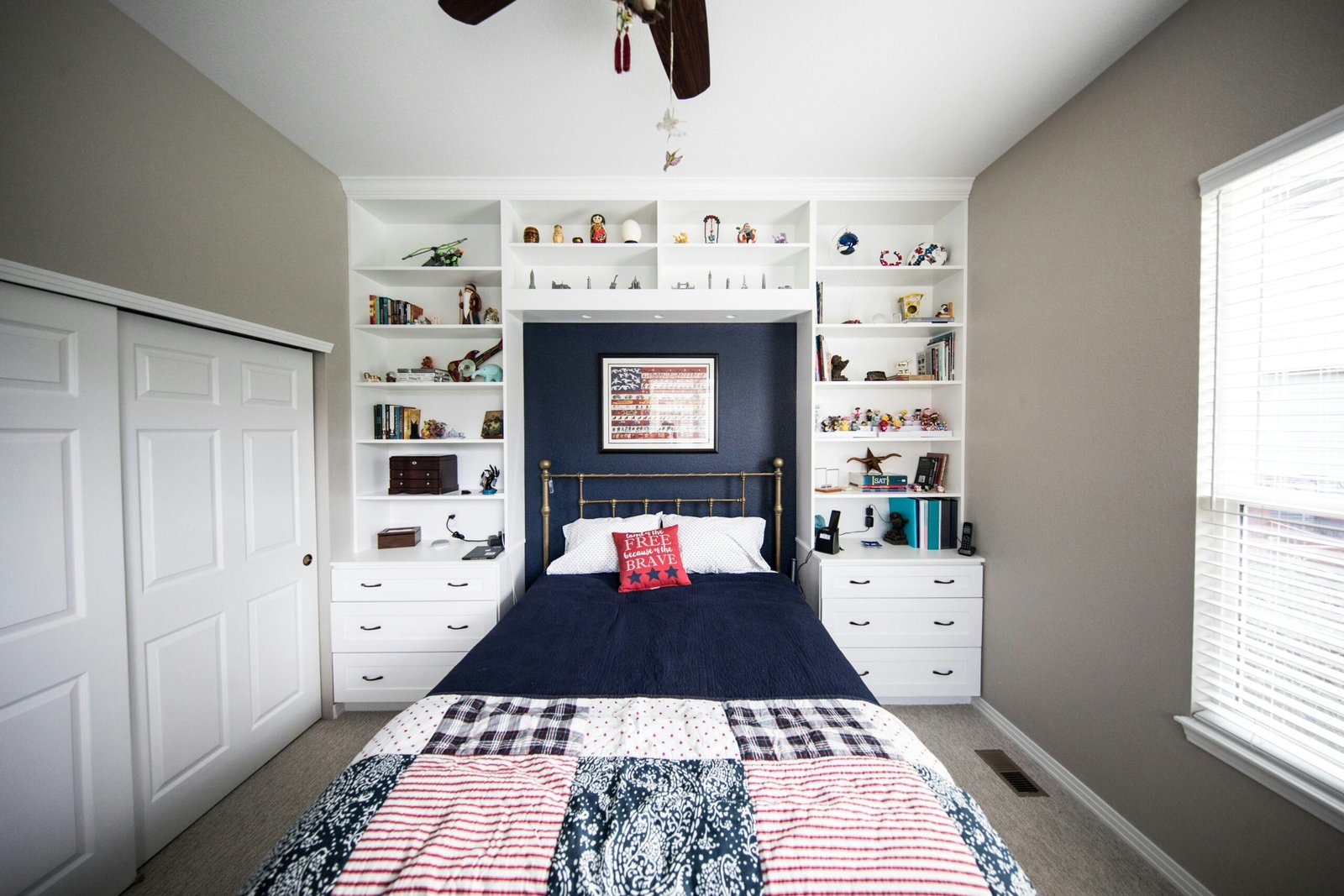
How to Evaluate Reviews, Portfolios, and Showroom Quality
Star ratings are useful, but the words inside the reviews matter more. Look for comments about measurement accuracy, installation cleanliness, communication, warranty response, delivery timing, and bed mechanism reliability.
We recommend checking at least three review sources: Google, Yelp, Houzz, BBB, Angi, Trustpilot, or local community groups such as Nextdoor. A company with 4.8 stars across Google reviews, Houzz project photos, and no unresolved BBB pattern complaints is usually more reassuring than a store with a perfect 5.0 rating from only six reviews.
Read negative reviews carefully, too. One late delivery during a supply shortage may not be a deal breaker. Repeated complaints about crooked cabinets, missed appointments, beds that won’t stay closed, or warranty silence are much more serious.
Portfolio red flags include stock manufacturer photos only, no room context, no close-ups of cabinetry seams, no visible hardware, no before-and-after examples, and no photos showing how the wall bed interacts with baseboards, outlets, desks, or shelving.
When you visit a showroom, use this checklist:
- Open and close the Murphy bed 3–5 times yourself.
- Check whether cabinet doors and panels align evenly.
- Inspect edges, seams, hinges, handles, and finish consistency.
- Test desk, shelving, wardrobe, or lighting add-ons.
- Ask about mattress thickness and weight limits.
- Look for anchoring examples or installation mockups.
For example, if you’re converting a 10-by-12-foot home office, compare a vertical queen bed, a horizontal full bed, and a desk-integrated wall bed. That one test can reveal whether the bed blocks your chair path, closet door, window, or standing desk.
Questions to Ask Before Booking a Murphy Bed Consultation
Before you book a consultation, prepare your questions. A good store will answer them directly, and the conversation will quickly show whether you’re dealing with a specialist or a salesperson reading from a product sheet.
Start with design questions:
- What bed sizes do you build: twin, full, queen, king, or custom dimensions?
- Do you offer both vertical and horizontal Murphy beds?
- Can you add shelving, wardrobes, desks, lighting, drawers, closed storage, or bookcases?
- Do you provide CAD drawings, 3D renderings, or finish samples before approval?
- Can you match existing closets, trim, paint colors, flooring tones, or cabinetry?
Then ask installation questions:
- Who installs the unit: employees or subcontractors?
- How do you anchor the bed to studs, masonry, or structural framing?
- Do you check ceiling height, baseboards, outlets, studs, flooring transitions, and door clearance?
- Will the installers move furniture, remove old furniture, or patch trim if needed?
Business questions matter just as much:
- Are you licensed and insured where required?
- What warranties cover the cabinetry, hardware, finish, and labor?
- What happens if the lift mechanism fails?
- How long does fabrication take in 2026?
- Do you provide a written estimate, drawings, and a change-order policy?
For cost control, ask which finishes are standard, which upgrades add the most cost, and whether delivery, installation, removal, and hardware are included. Based on our research, unclear estimates are one of the most common sources of buyer frustration in custom furniture projects.

Custom Murphy Bed Prices, Timelines, and What Affects Cost
In 2026, basic wall bed units may start around $1,500–$3,000, semi-custom installed systems often run $3,000–$7,000, and high-end built-ins with cabinetry can exceed $8,000–$15,000 depending on market, materials, room complexity, and storage design.
If you’re comparing prices while wondering, How can I locate a store that specializes in custom murphy beds?, remember that the lowest quote may not include the same scope. One provider may include design, delivery, anchoring, trim adjustments, and warranty labor, while another may quote only the cabinet box.
Major cost drivers include:
- Bed size: Queen beds usually cost more than twin or full beds due to material size and mechanism capacity.
- Orientation: Horizontal beds may require different cabinetry proportions than vertical beds.
- Materials: Particleboard is usually cheapest; MDF paints well; plywood is lighter and stronger; solid wood and veneer raise the price.
- Finish: Laminate is durable and budget-friendly, while painted, stained, or veneer finishes cost more.
- Add-ons: Side cabinets, wardrobes, lighting, desks, outlets, bookcases, and soft-close hardware increase labor and material costs.
- Installation: Delivery access, condo rules, stairs, old-home walls, and uneven floors can affect the final price.
Timelines are usually longer than buyers expect. A typical custom project includes showroom appointment, measurement visit, design approval, fabrication, delivery, and installation. Many projects take 4–12 weeks, while complex millwork can run longer during busy remodeling seasons.
Protect yourself with an itemized written quote showing product cost, installation cost, warranty terms, deposit amount, balance due, material specifications, and change-order rules. A reasonable deposit is common, but paying 100% upfront before measurement and documentation is a risk.
Safety, Installation, and Warranty Details Most Buyers Miss
A Murphy bed must be properly anchored to wall studs, masonry, or structural framing. Installation quality is just as important as cabinetry design because the bed moves, carries mattress weight, and transfers force through the frame every time it opens and closes.
Common safety risks include inadequate anchoring, overloaded shelves, wrong mattress thickness or weight, poor mechanism adjustment, uneven floors, and DIY installation without structural checks. The U.S. Consumer Product Safety Commission tracks furniture-related safety concerns, and its furniture tip-over guidance reinforces a simple point: heavy furniture should not rely on gravity alone.
Ask the store which safety concepts and manufacturer instructions they follow. UL and ASTM-related product safety principles often focus on stability, load performance, hardware reliability, and proper use, while manufacturer installation manuals specify exact fastener locations, clearances, and mattress limits.
Warranty coverage should be broken into categories:
- Cabinetry warranty: Panels, doors, shelves, and structural components.
- Hardware or lift mechanism warranty: Pistons, springs, hinges, brackets, and moving parts.
- Labor warranty: Installer workmanship and adjustment issues.
- Finish warranty: Peeling, bubbling, chipping, or discoloration, subject to exclusions.
- Exclusions: Misuse, relocation, water damage, overloading, unauthorized modifications, or using the wrong mattress.
After installation, photograph anchoring points before panels fully cover them if possible, keep all manuals, register the product if required, and test operation monthly for the first 90 days. Contact the installer immediately if the bed drifts, slams, squeaks, rubs, or won’t stay closed.
Smart Ways to Compare Local and Online Custom Murphy Bed Options
Local stores and online retailers solve different problems. Online wall bed kits from places such as Wayfair, Costco, Amazon, or direct-to-consumer suppliers can cost less, but they usually place more responsibility on you for measuring, assembly, anchoring, and service follow-up.
Online makes sense when your room is simple: rectangular walls, standard ceiling height, clear stud access, no built-in cabinetry, no custom finish matching, and confident DIY skills. It can also work when your budget is closer to $1,500–$3,500 and you’re comfortable hiring an independent installer separately.
Local is better for older homes, uneven floors, tight rooms, mixed-use home offices, condos with delivery restrictions, matching existing millwork, or any project involving electrical outlets and integrated lighting. Local providers can inspect the actual room, adjust for baseboards and flooring transitions, and return for service if the mechanism needs adjustment.
| Your Situation | Best Option | Why |
|---|---|---|
| Low budget, simple room, DIY confidence | Online kit | Lower product cost, standard sizing |
| Guest room with storage needs | Specialty Murphy bed store | Better mechanisms, installation, and design options |
| Home office with desk and shelving | Closet company or specialty store | Good balance of modular storage and custom planning |
| Historic home or trim matching | Cabinetmaker or millwork shop | Precise built-in appearance and finish matching |
| Luxury studio or compact condo | Resource Furniture-style showroom or custom specialist | High-function space-saving furniture and design support |
Brands and providers such as Wilding Wallbeds, More Space Place, California Closets, Closet Factory, Resource Furniture, local cabinet shops, and independent installers can all be worth comparing. The best fit depends on budget, room complexity, desired finish, timeline, and how much installation responsibility you want to carry.
Red Flags That a Murphy Bed Store Is the Wrong Choice
Some warning signs should stop the conversation immediately. No physical address, no installation photos, pressure to pay in full upfront, vague material descriptions, no written warranty, no proof of insurance, and refusal to provide references are all signs to keep shopping.
Extremely low quotes can be risky because the missing cost often shows up later. Cheap hardware, poor anchoring, thin panels, unfinished edges, limited service support, and hidden installation fees can turn a “deal” into a frustrating project. If one quote is 40% lower than the others, ask exactly what materials, hardware, delivery, design, installation, and warranty services are excluded.
Verify business legitimacy before paying a deposit:
- Search the company name through the Better Business Bureau for complaint history.
- Check state contractor license databases where applicable.
- Review Google Business Profile history and photo dates.
- Ask for manufacturer dealer credentials if they claim to represent a brand.
- Request proof of insurance for in-home installation work.
- Confirm whether local permits are needed for electrical modifications or built-in lighting.
Based on our analysis of customer review patterns, the biggest problems usually involve poor communication, unclear scope, weak installation, or warranty disputes. Those problems are easier to avoid before signing than after the bed is installed.
Use this exit rule: if a provider can’t clearly explain anchoring, mattress limits, mechanism type, material construction, installation responsibility, and warranty coverage, don’t try to talk yourself into the purchase. A safe, well-built Murphy bed should come with clear answers.
Conclusion: Your Next Steps to Find the Best Custom Murphy Bed Store
How can I locate a store that specializes in custom murphy beds? Use a focused 48-hour plan: search 5–7 local providers, save portfolio examples you like, call 2–3 stores, ask the consultation questions, and book one showroom visit plus one in-home measurement.
Before contacting stores, prepare your room measurements, ceiling height, wall photos, outlet locations, desired mattress size, storage needs, finish preferences, and budget range. If the room doubles as an office, include desk dimensions, chair clearance, monitor placement, and any printer or file storage needs.
During the showroom visit, open and close the bed several times, inspect cabinet alignment, ask about piston lifts or spring mechanisms, and request written warranty details. During the in-home measurement, make sure the provider checks studs, baseboards, flooring transitions, outlets, ceiling height, and delivery access.
For 2026, prioritize verified installation experience, transparent pricing, current reviews, and a warranty that covers both hardware and workmanship. The right custom Murphy bed store should make the bed feel built for the room, operate safely, match your home’s style, and provide clear support after installation. A good wall bed saves space; a great one makes the room work harder without looking like it’s trying.

Key Takeaways
- Search beyond “Murphy bed store” by checking custom closet companies, cabinetry shops, millwork studios, home organization firms, and wall bed showrooms.
- Compare 5–7 providers, then shortlist 2–3 with recent reviews, real project photos, clear warranties, and documented installation experience.
- A true custom Murphy bed specialist should provide in-home measurement, design drawings, multiple finish and storage options, and a clear anchoring plan.
- In 2026, expect installed custom Murphy bed projects to commonly range from $3,000–$7,000, with high-end built-ins exceeding $8,000–$15,000.
- Never hire a provider that can’t explain mattress limits, lift mechanisms, wall anchoring, warranty coverage, and installation responsibility clearly.
Frequently Asked Questions
How do I find a Murphy bed store near me?
Search Google Maps, Apple Maps, Yelp, Houzz, and Angi using phrases like “custom Murphy beds near me,” “wall bed showroom,” and “custom closet company Murphy bed.” Shortlist companies with recent reviews, real installation photos, a physical address, and clear consultation options.
How can I locate a store that specializes in custom murphy beds?
The best way is to compare local Murphy bed showrooms, closet companies, custom cabinetry shops, and cabinetmakers, then verify portfolios, reviews, warranties, and installation experience. A true specialist should offer in-home measurements, design drawings, multiple finishes, safe anchoring, and professional installation.
Are custom Murphy beds worth it?
Custom Murphy beds are worth it when you need the bed to fit a specific room, match existing finishes, or include storage, desks, lighting, or wardrobes. They cost more than basic kits, but they usually provide better fit, safer installation, and a more built-in appearance.
What is the average cost of a custom Murphy bed in 2026?
In 2026, basic wall bed units often start around $1,500–$3,000, semi-custom installed systems commonly run $3,000–$7,000, and high-end built-ins with cabinetry can exceed $8,000–$15,000. Price depends on bed size, materials, hardware, storage, finishes, and installation complexity.
Should I buy a Murphy bed online or from a local store?
Buy online if your room is simple, your budget is lower, and you’re comfortable with measuring, assembly, and anchoring. Choose a local store if you need custom cabinetry, professional installation, finish matching, integrated lighting, or help with an older or irregular room.
What should I ask a Murphy bed installer before hiring them?
Ask how they anchor the bed, whether installers are employees or subcontractors, what mattress limits apply, and what warranties cover hardware, cabinetry, finish, and labor. Also ask whether they inspect studs, outlets, baseboards, ceiling height, and flooring transitions during measurement.