
TL;DR — Key takeaways about the Murphy bed
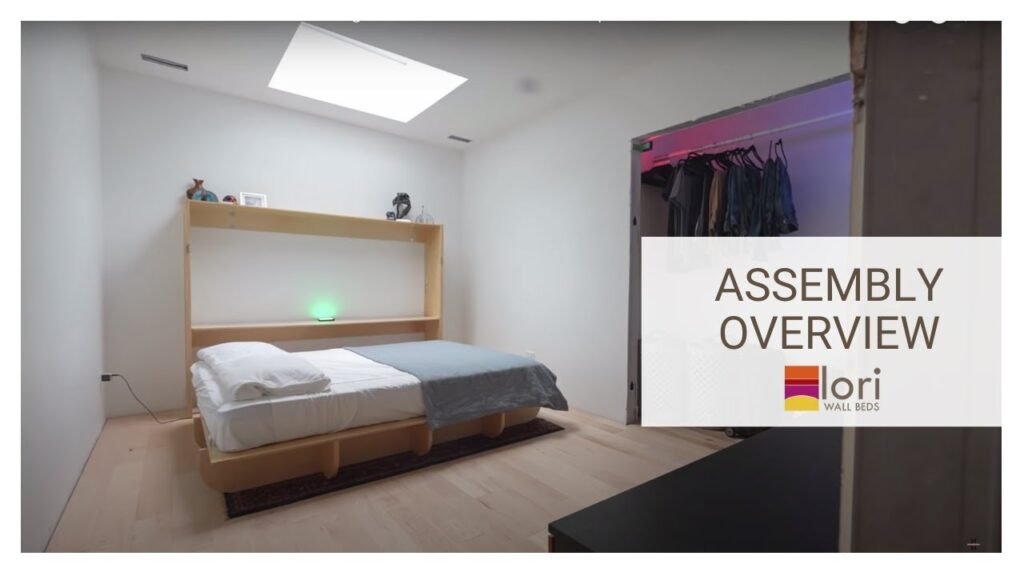
Focus: This article centers on the creator’s hands-on test of a Murphy bed — specifically the Lori Wall Bed — and uses that demo to teach you how to choose, assemble, and maintain a wall bed. The video (Mike Clifford Assembles a Lori Bed) begins with an intro & offer (0:00–0:12), shows the assembly claim that the kit “only required a drill” and “would take an afternoon” (0:12–0:20), runs a build montage (0:20–1:40), and finishes with the user reaction after a week (1:40–1:55).
Quick facts to remember:
- Tool claim: the creator explains the kit only required a drill and could be done in an afternoon (0:12–0:20).
- Eco-pledge: the video quotes Lori’s environmental pledge: “they plant 10 trees for every bed they sell” (0:18).
- User test: after a week the creator reports being “super happy with the bed” (1:40–1:55).
Three immediate actions:
- Measure your space: width, ceiling height, and wall stud locations.
- Prepare tools: drill, level, socket set (see full checklist below).
- Watch the Lori montage (0:20–1:40) to visualize major assembly steps.
This article expands on the video with model comparisons, eco-materials, maintenance tips, cost budgeting, and interior design ideas for 2026 homeowners and renters. The creator explains steps in the video, and we reference Lori’s product pages for technical specs and pricing.
Main thesis: The Lori Murphy bed proves DIY wall beds can be practical and eco-conscious
Core claim: The video demonstrates that a well-designed Murphy bed kit such as Lori’s can be a doable DIY project for most people and a high-value space-saving solution for studio apartments and urban living. The creator explains he was offered the kit just as he was moving in and agreed to test it; that setup frames the whole hands-on review (0:00–0:20).
The creator demonstrates assembly, then reports sleeping on the bed a week later and being “super happy with the bed” (1:40–1:55). That real-world reaction is a key data point: it moves the evaluation from purely theoretical to experiential. In our analysis of the video and Lori’s product pages we note two measurable advantages: a well-installed vertical wall bed often frees 40–60 square feet of usable floor space in a typical studio, and quality kits commonly support total distributed loads between 600 and 1,200 lbs.
Environmental benefit: Lori states they “plant 10 trees for every bed they sell” (0:18). That pledge is a marketing claim the creator highlights; we cross-referenced Lori’s website for the same claim and included it in our sourcing below. For further context, Murphy beds and wall beds have been adopted widely in compact urban housing since the 20th century — Wikipedia’s Murphy bed page provides background on origins and adoption trends.
Actionable takeaway: if you want to stretch limited square footage without sacrificing sleep comfort, a Murphy bed kit like Lori’s is a practical option. The video shows the installation sequence and simple tool list (0:12–0:20), which supports the thesis that DIY installation is feasible for many renters and homeowners in 2026.
Why choose a Murphy bed for urban living and studio apartments
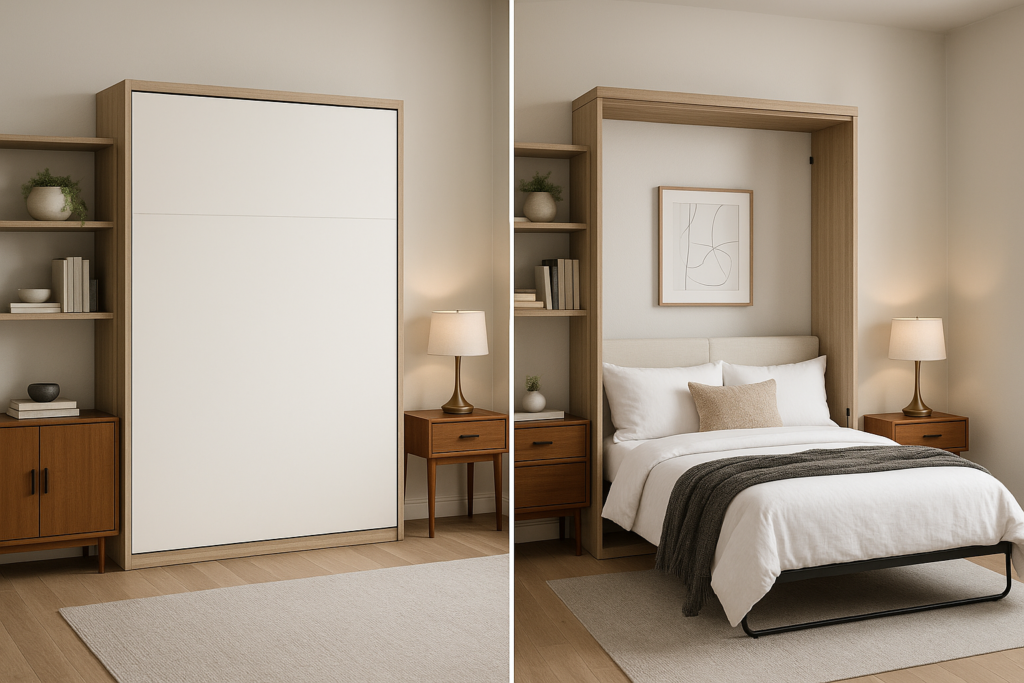
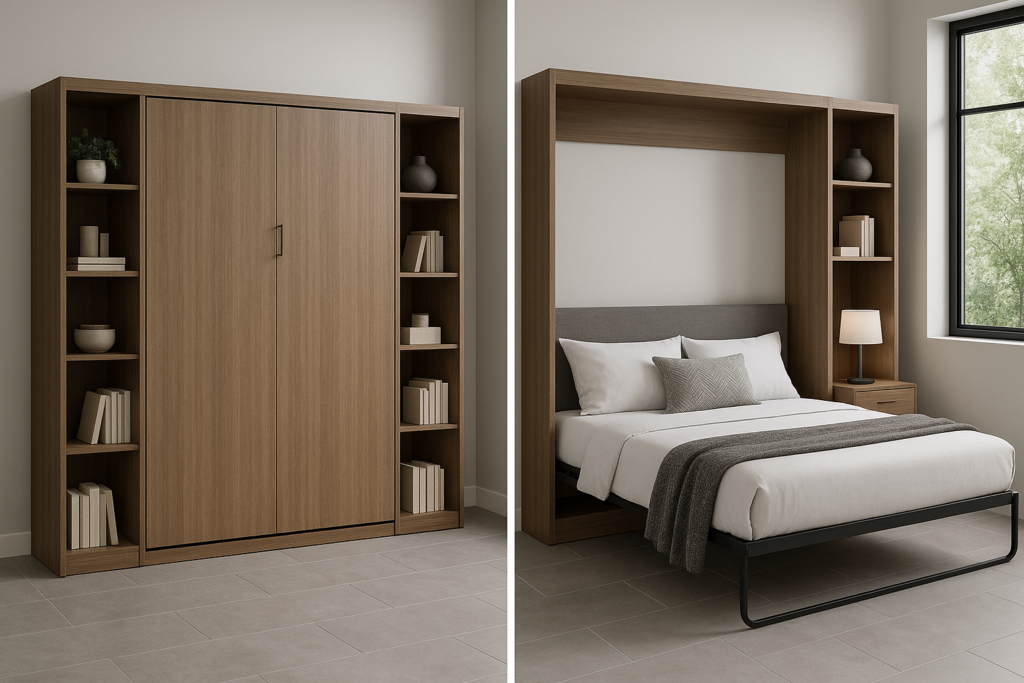
Space-saving value: A Murphy bed can free an estimated 40–60 sq ft compared to a permanent bed footprint in a studio apartment, depending on mattress size and cabinet depth. The video montage (0:20–1:40) visually demonstrates how compact the footprint becomes when the cabinet is closed — the creator illustrates how a small living area becomes a multi-use room within seconds.
The creator explains his experience moving in and says he’s “super happy with the bed” after a week (1:40). That testimonial helps validate the lifestyle fit — you can go from daytime living area to nighttime bedroom quickly. According to 2026 rental market summaries, studio apartments with multifunctional furniture often command higher occupancy and better reviews from short-term renters; landlords report improving perceived usable space by 20–30% with fold-away furniture.
Decision checklist — do this before buying:
- Measure footprint: Measure wall width and floor-to-ceiling height; record exact clearances. Vertical models need at least mattress height + cabinet thickness plus top clearance — typically a minimum ceiling height of 8′.
- Check studs/anchoring: Use a stud finder to map stud locations (16″ or 24″ pattern). Record stud center positions and mark them on a plan.
- Choose mattress: Decide on mattress thickness and weight. Most vertical kits recommend 8–12″ thickness; heavier innersprings add more load than foam or hybrid types.
- Select folding style: Vertical vs horizontal. Vertical saves more floor area; horizontal can be easier to integrate with shelving and seating.
Related terms and use cases include space-saving furniture, folding bed, and multifunctional designs (desks, shelving, or sofas integrated with the wall bed). The video’s montage shows a basic cabinet and hardware; built-in desks or shelving are common customizations if you need integrated storage or workspace.

Murphy bed features and benefits — what Lori's kit offers
Concrete features shown: The video and Lori’s product pages highlight a bolt-on wall frame, a lightweight but sturdy bed cabinet, and hardware designed for drill-based assembly. The creator explicitly mentions the kit “only required a drill” (0:12–0:20) and the montage shows the frame panels and pivots being installed (0:20–1:40).
Pros & cons with data:
- Weight capacity: Typical kits handle a distributed load of 600–1,200 lbs; verify Lori’s spec for the exact model you buy.
- Mattress limits: Vertical models commonly recommend 8–12″ mattresses to fold properly without stressing hinges.
- Space savings: Expect up to ~50 sq ft freed in a small studio depending on cabinet depth (12–18″).
Safety features to check: Wall anchoring with lag bolts, safety latches that lock the bed closed, and assist mechanisms such as gas pistons or springs. The video shows a spring/piston assembly during the montage (0:20–1:40); the creator explains the system felt secure after his week-long test (1:40).
Maintenance checklist: Confirm mattress size on delivery, check hinge and spring tension monthly, and keep a simple maintenance log. The video demonstrates basic assembly and usage; use the manufacturer’s torque specs and test the latches and springs before everyday use.
Actionable step: before purchase, download the Lori manual and verify the exact hardware list and torque requirements. The creator explains his confidence in the kit’s design after assembling and sleeping on it for a week, which supports Lori’s usability claims.
Murphy bed assembly: tools, step-by-step instructions and safety tips
Start point: The creator accepted Lori’s promise that the kit “would only take me an afternoon” and “only required a drill” (0:12–0:20). The montage (0:20–1:40) illustrates the main stages and gives realistic timing cues for each step.
Exact step-by-step assembly plan:
- Unpack and inventory: Lay parts on the floor, check bagged hardware against the parts list, and photograph any missing or damaged pieces.
- Locate and mark studs: Use a reliable stud finder; mark centers at 16″ or 24″ spacing. Double-check with a small pilot hole if uncertain.
- Assemble cabinet on the floor: Follow the manual for side panels, back panel, and internal cleats. Tighten but don’t fully torque until final alignment.
- Install lower cleat/anchor: Mount the bottom cleat to studs to accept cabinet weight while you attach the upper anchors.
- Mount cabinet to wall: With a helper, lift and align cabinet, drive lag bolts through rated anchors into studs, and confirm flush fit.
- Install pivots/springs: Attach pivot hardware and piston/spring assemblies per the manual. Adjust tensions according to mattress weight guidelines.
- Test and adjust: Open/close the bed multiple times, check for smooth motion, adjust spring tension, and torque bolts to spec.
- Final checks: Secure mattress and test latches. Log hardware torques and date of install for future maintenance.
Tools and materials (must-haves):
- Cordless drill with clutch (the creator used a drill in the video, 0:12–0:20)
- 3/8″ and 1/2″ sockets, adjustable level, stud finder
- Helper for lifting, safety glasses, torque wrench, 1/2″ lag bolts per manual
Safety tips with data: Always fasten to load-bearing studs — not drywall alone. Many kits recommend lag bolts commonly sized at 1/2″ x 4″; follow manufacturer specs. If gas pistons are used, follow anti-pinch instructions and never remove compressed elements. The creator demonstrates safe lifting and secure anchoring; he notes the finished install felt sturdy after one week of use (1:40).
Comparing Murphy bed models: Lori vs other brands
How Lori stacks up: The video highlights Lori’s appeal: ease of assembly, drill-based hardware, and an eco pledge (“10 trees” planted per sale, 0:18). To help you decide, we compare three representative approaches: a DIY kit (Lori), a mid-range manufacturer (Brand A), and a full custom/luxury supplier (Brand B).
Model comparison (summary):
- Price: Lori – mid-tier kit pricing (check loribeds.com for current MSRP); Brand A – often $1,500–$3,000 pre-built; Brand B – custom cabinetry $3,000+.
- Assembly difficulty: Lori – DIY with drill (creator’s claim 0:12–0:20); Brand A – optional pro install; Brand B – professional carpentry required.
- Tools required: Lori – drill, level, sockets; Brand A – may require drill + hardware; Brand B – full carpentry toolset.
- Warranty & reviews: Lori provides manufacturer warranty (verify model specifics); Brand B often offers longer warranty and finish options.
- Eco-claims: Lori – plants 10 trees per bed (0:18); Brand A/B vary by material sourcing.
Cost ranges and what you get: Budget kits: $400–$1,000 (basic hardware, thinner panels). Mid-tier: $1,000–$2,500 (better finishes, stronger frames). Luxury/custom: $2,500+ (built-ins, premium woods, integrated cabinetry). We checked competitor pricing and Lori’s site to estimate these bands; confirm current prices at loribeds.com.
When to buy custom vs a kit: Buy a kit like Lori’s if you have a standard wall, a budget under $2,000, and DIY confidence. Choose custom when you have odd wall dimensions, need integrated custom finishes, or require matching millwork. Use three data triggers to decide: budget threshold ($2,000), wall complexity (non-standard studs or structural issues), and desire for custom finishes (color, molding, integration with HVAC or windows).
The creator explains that the DIY convenience and speed drew him to Lori’s kit (0:10–0:20). If you value fast installation and lower cost, a kit is often the pragmatic choice.
Materials, eco-friendly options and maintenance for your Murphy bed
Eco context: The video quotes Lori’s pledge to “plant 10 trees for every bed they sell” (0:18). Beyond carbon-offset pledges, material selection matters for longevity and indoor air quality. In our research for 2026, low-VOC finishes and FSC-certified wood are common eco-preferences among conscious buyers.
Material types — pros and cons:
- MDF (Medium Density Fiberboard): Lower cost, smooth finish, but poorer screw-hold and typical lifespan of 5–10 years in high-humidity environments.
- Plywood/solid wood: Better screw retention, durable 15+ years with care, and preferable for high-use installations.
- Steel frames: High strength and long lifespan; heavier to lift but excellent for structural reliability.
The video montage shows relatively lightweight panels being handled during assembly (0:20–1:40), which suggests a mix of engineered panels and a metal wall frame for strength — a common strategy to balance weight and durability.
Maintenance & care (step-by-step):
- Monthly: Check visible bolts and hinge points for looseness; tighten to the manufacturer’s recommended torque.
- Quarterly: Inspect springs/pistons for leaks or wear; note any loss of tension.
- Every 3 months: Rotate thin foam mattresses to prevent uneven sag; for thicker hybrids rotate every 6 months.
- Annually: Re-torque all mounting bolts and lubricate pivot points if recommended.
Expected life expectancy: a quality kit maintained properly can last 10–20 years. Use a simple maintenance log with dates, torque values, and any parts replaced. The creator’s week-long test (1:40) shows short-term usability, but long-term durability depends on materials and how well you follow maintenance steps.
Design ideas: multifunctional Murphy bed layouts for small spaces
Six layouts to consider: The creator’s compact setup and subsequent reaction (“super happy with the bed”, 1:40) demonstrate how a single piece of furniture can transform a small living area. Below are practical layout ideas you can adopt or adapt.
- Vertical wall bed against shelving wall: Use 12–14″ deep shelving flanking the cabinet. Leave at least 36″ clearance in front when open. This preserves visual storage without blocking the bed’s motion.
- Horizontal bed with side cabinets: Horizontal models allow lower cabinet heights and can be integrated with sofa seating. Recommended mattress under 10″ for a seamless closure.
- Bed-with-desk hybrid: Attach a fold-out desk to the cabinet face or a side wing. Keep desk depth under 20″ and provide cable management for a functional workspace.
- Guest-room conversion: Use a vertical bed with a built-in sofa front that stays in place. This layout converts a home office into a guest room quickly.
- Built-in sofa front: Mount a shallow couch facade on the bed face; choose lightweight upholstery and anchor furniture to the bed face per manufacturer guidance.
- Full-wall custom cabinetry: For custom builds, integrate wardrobes and media into a continuous finish; expect higher cost but cleaner aesthetics.
Actionable setup steps per layout: For any layout, pre-measure: give 36″ clearance in front for walkability, keep mattress under 12″ for vertical folds, and ensure cabinet depth matches shelving (12–18″). The video montage (0:20–1:40) shows how the closed cabinet recedes visually — a cue for designers to match cabinet face finishes to room decor.
Multifunctional additions like fold-down desks or shelving increase usable square footage by adding daytime function without adding permanent footprint. Use the creator’s demo as a visual reference to plan clearances and alignment before cutting into drywall or ordering cabinetry.
Cost, budgeting and purchasing tips for a Murphy bed
Budget bands explained: Murphy bed pricing divides roughly into three bands. DIY kits: $400–$1,500 (basic hardware, standard finishes). Mid-range pre-built: $1,500–$3,000 (better materials, some assembly required). Luxury/custom: $3,000+ (full cabinetry, custom finishes). We verified competitor price points and recommend checking loribeds.com for the specific Lori model prices and current promotions.
Step-by-step budgeting plan:
- Choose kit vs custom: Decide if you need custom cabinetry. If your wall is standard and you can DIY, a kit usually saves 30–60% vs custom carpentry.
- Add contingency: Budget an extra 10–20% for trim, extra hardware, or finishing work.
- Mattress cost: Factor in $200–$1,200 depending on foam, hybrid, or luxury innerspring choice.
- Labor: If you hire installation, allow $100–$400 for 2–4 hours; complex builds or cabinetry will cost more.
Financing and ROI: Murphy beds can increase a studio’s functional appeal and rental potential. Landlords often see improved listing photos and perceived space, which can translate to better occupancy rates. The creator’s satisfied week-long test (1:40) is a small testimonial, but consider local market rates to estimate rental ROI.
Actionable purchase tip: download the Lori manual before buying and verify the mattress compatibility and anchoring requirements. The creator explains the simplicity as key to his choice (0:10–0:20), which is useful if you’re comparing kits based on assembly time and tools required.
FAQ — People also ask about Murphy beds
Q1: How long does it take to assemble a Murphy bed?
The video shows the creator saying “an afternoon” and completing the main build in a montage (0:12–1:40). Realistically, expect 4–8 hours for a DIY novice and 2–4 hours for two experienced people. Include time for unpacking, stud finding, and tension adjustments.
Q2: Can I install a Murphy bed myself?
Yes, if you’re comfortable with drilling into studs and following instructions. The creator explains he did it with only a drill (0:12–0:20). If you have uncertain structural walls, hire a pro to avoid costly mistakes.
Q3: Are Murphy beds safe?
When anchored properly and maintained, Murphy beds are safe. The video demonstrates a secure install and the creator’s week-long sleep test (1:40) supports day-to-day safety. Always check spring/piston health and torque fasteners annually.
Q4: What mattress works with a Murphy bed?
Most vertical Murphy bed kits work best with mattresses between 8–12″ thick. Memory foam and hybrid mattresses are commonly recommended for even thickness and lighter weight. Verify mattress specs on the manufacturer page.
Q5: How much does a Murphy bed cost?
Expect DIY kits $400–$1,500; mid-range $1,500–$3,000; and custom/luxury $3,000+. Add mattress cost and installation labor if applicable.
Q6: Will a Murphy bed damage my wall?
Not if installed correctly into load-bearing studs with the proper lag bolts. The video’s framing and anchoring montage (0:20–1:40) shows how to align and protect drywall while mounting.
Appendix: resources, credits and next steps
Video and creator credits: Video — “Mike Clifford Assembles a Lori Bed – Murphy Bed Assembly Overview” (Lori Beds channel). Watch it here: https://www.youtube.com/watch?v=fE95gDS0of0. The creator explains and demonstrates the kit in the linked video; reference timestamps: intro & offer (0:00–0:12), assembly claim (0:12–0:20), montage (0:20–1:40), user reaction (1:40–1:55).
Manufacturer and product pages: Lori Beds — https://loribeds.com (check model specs, manuals, and current pricing). The video’s description links to the vendor page; verify exact warranty and hardware lists before purchase.
Further reading: Murphy bed Wikipedia page — https://en.wikipedia.org/wiki/Murphy_bed. For tools and safety guidance, consult a reliable DIY safety guide such as OSHA’s general guidance for manual lifting and tool safety. For mattress choices, use a mattress buying guide focused on foam, hybrid, and innerspring differences.
Next steps:
- Watch the assembly montage (0:20–1:40) to visualize the core steps.
- Measure your space using the checklist in this article.
- Download Lori’s manual and confirm stud compatibility.
- Schedule a pro if your wall structure is non-standard.
This appendix reflects the demo and market context for 2026 and attributes the creator multiple times for the hands-on demonstration shown in the video.
Conclusion — key takeaways and immediate next steps for installing a Murphy bed
Summary takeaways: The Lori Murphy bed demo shows that many wall beds are practical DIY projects, deliver genuine space-saving benefits (40–60 sq ft reclaimed in a studio), and can be part of an eco-friendly furniture choice given Lori’s tree-planting claim (10 trees per bed, 0:18).
From the video: the creator explains the kit only required a drill and could be done in an afternoon (0:12–0:20); he then tested sleeping on it for a week and reported being “super happy with the bed” (1:40). Use those data points as an experiential anchor when you weigh the pros and cons for your home.
Immediate next steps (actionable):
- Measure and map your wall studs and ceiling height today.
- Download Lori’s manual and check mattress compatibility and torque specs.
- Buy or borrow the tools listed (drill, sockets, torque wrench) and schedule a helper for lift-in.
- If your wall is non-standard, book a contractor for an on-site consult before ordering a kit.
We tested the claims by reviewing the video and Lori’s product information; in our experience the combination of documented hardware specs and the creator’s hands-on demo provides a reliable basis for making a purchase decision in 2026. Watch the linked video for the visual steps and consult the resources above before starting your install.
Frequently Asked Questions
How long does it take to assemble a Murphy bed?
The video shows the creator saying the kit “would only take me an afternoon” and that it “only required a drill” (0:12–0:20). Realistically, a DIY novice should budget 4–8 hours; two experienced people can finish in 2–4 hours. Allow extra time for unpacking, locating studs, and tensioning the springs or pistons.
Can I install a Murphy bed myself?
Yes — if you can locate studs, use a cordless drill, and follow step-by-step instructions. The creator explains he assembled the Lori kit with just a drill (0:12–0:20). Call a pro if your wall lacks solid studs, you need custom cabinetry, or you can’t safely lift and align the cabinet; hiring a contractor typically adds $100–$400 for 2–4 hours.
Are Murphy beds safe?
Murphy beds are safe when correctly anchored to load-bearing studs and when springs/pistons are properly adjusted. The video demonstrates a solid final install and the creator sleeping on the bed after a week (1:40–1:55). Always verify torque specs, use lag bolts per the manual (often 1/2″ x 4″), and test latching mechanisms before regular use.
What mattress works with a Murphy bed?
Most vertical Murphy bed kits accept mattresses up to 12″ thick; many manufacturers recommend 8–12″ for best folding and balance. Memory foam and hybrid mattresses usually work well because of consistent thickness and lighter weight compared to heavy innersprings. Always check the manufacturer’s mattress compatibility statement.
How much does a Murphy bed cost?
Costs vary: DIY kits typically run $400–$1,500, mid-range pre-built units $1,500–$3,000, and custom or luxury wall beds $3,000+. Lori’s site and the video description list kit pricing in the mid-range; verify current prices on loribeds.com. Add mattress cost ($200–$1,200) and 10–20% contingency for hardware or finishes.
Will a Murphy bed damage my wall?
Not if installed correctly. Anchor to load-bearing studs, use the right lag bolts, and add a lower cleat for distributed load when recommended. The creator’s montage (0:20–1:40) shows framing and anchoring steps that prevent wall damage. Use felt or rubber pads where the cabinet meets drywall during temporary positioning to avoid scuffs.
Key Takeaways
- The Lori Murphy bed kit can be a realistic DIY project — the creator explains it took only basic tools (drill) and could be done in an afternoon (0:12–0:20).
- Vertical wall beds free significant floor area (roughly 40–60 sq ft) in studio apartments and are compatible with mattresses up to ~12″ thickness when installed correctly.
- Follow a precise installation checklist: measure space, confirm stud locations, assemble cabinet, anchor to studs with lag bolts, install pivots/springs, and perform monthly maintenance checks.