

https://www.youtube.com/watch?v=edyCqLn3m9o — Best Murphy Beds for Small Spaces: Reviews & Key Takeaways
murphy bed buyers, start here: this summary condenses the Top Best Pro video and gives you the exact next steps so you don’t waste time. The creator opens the video at 0:00 with a quick tour of the picks and a promise to show build quality and mechanisms.
Direct video link: Top Best Pro — Top Best Murphy Beds Reviews (0:00).
One-line verdicts (0:20–1:10):
- Bestar Full Murphy (Best overall): solid build, smooth mechanism, good value.
- Budget flat-pack option: cheapest upfront cost, needs careful assembly, lower long-term durability.
- Premium integrated cabinet models: custom finishes and full integration, higher price but long-term resale value.
Hard facts every scanner needs: typical price range for quality murphy bed systems is $800–$3,500; a wall bed setup typically reclaims roughly 30–40 sq ft of usable space versus a standard bedroom layout; and mattress compatibility is standard: queen ≈ 60″×80″, king ≈ 76″×80″.
The creator explains the main thesis at 1:15: murphy beds are the most practical form of space-saving furniture for compact living, giving multi-functional value for home offices and guest rooms. The video demonstrates staged rooms that show how a bed folds away and transforms the space (see 3:10 for staging examples).
Quick action checklist (expanded later): measure floor and wall area, decide mattress size, pick mechanism type (spring vs piston), and choose between flat-pack or custom murphy bed. Note for updates: watch for model revisions, warranty changes, and manufacturer recalls when you buy — we’ll flag those where available.
Why choose a murphy bed for compact living, home office, or guest room?
The creator explains in the intro and product comparisons (0:50–1:30) that space-saving furniture like a murphy bed delivers both function and form: you get a full mattress for sleep and a clear floor for daytime use.
Two concrete statistics to keep in mind: a typical permanent bedroom occupies 100–150 sq ft, while a murphy bed setup can reclaim roughly 30–40 sq ft of usable living or work area — a major difference in apartments under 500 sq ft, which many urban renters occupy.
When you compare a queen murphy bed versus a king murphy bed, there are clear trade-offs. A queen saves more room and tends to fit better into the 80″ wall width envelopes common in older buildings. A king gives more sleep surface but asks for wider cabinetry and stronger mechanisms; the creator compares sizes at 2:05 and shows side-by-side room shots.
Practical design outcomes: wall bed integration changes furniture design choices: you can replace a bulky dresser with built-in shelving, choose slim nightstands or floating shelves, and shift lighting plans so the bed area works as a desk during the day. The video shows room-staging examples at 3:10 that highlight these points.
Actionable measuring checklist (do this first):
- Measure the wall width and height where you want the murphy bed; record total usable wall length.
- Measure ceiling height — allow at least 84″ for most queen units; confirm with manufacturer specs.
- Measure floor clearance left and right for nightstands or cabinets — add 3–6″ side clearance if you plan drawers.
- Mark wall studs with a stud finder and note their center-to-center spacing.
- Measure swing clearance in front of the bed; leave a minimum 36″ to move comfortably when open.
Comparative note: when to pick a murphy bed vs a folding or sofa bed. The creator touches on these trade-offs at 1:40: choose a murphy bed when you want a true mattress and frequent sleep use; a sofa bed is best where seating is daily and sleeping is occasional; a folding bed frames are useful where wall attachment isn’t possible but comfort and space saving are secondary.
How murphy bed mechanisms work (spring, piston, and adjustable options)
The video breaks down the three most common mechanism families at 4:20: counterbalanced spring systems, gas-piston lifts, and adjustable dampers. Each affects cost, longevity, and user experience.
Key data points: mechanism warranties commonly range from 1–10 years; expected lifecycles are rated in thousands of open/close cycles (manufacturers typically specify 5,000–20,000 cycles); weight capacities vary but most queen frames handle 300–600 lbs distributed load — verify each product spec.
The creator explains pros and cons plainly at 4:35: springs are cheaper but need more maintenance, while pistons offer smoother, quieter action and adjustable tension. That phrasing in the video highlights practical trade-offs for daily users.
How the three types compare:
- Spring (counterbalance) systems: lower initial cost, require tensioning and periodic inspection, can be louder, and sometimes need replacement springs after many cycles.
- Gas-piston lifts: smoother and quieter, easier tension adjustment, support heavier cabinetry, and often come with longer mechanism warranties (but at a price premium).
- Adjustable dampers: useful when mattress thickness varies — they let you dial in travel limits so the mattress sits correctly and locking works reliably.
The creator emphasizes testing mechanism action in-store (4:40–5:05). That advice matters: smoothness under load and easy tension adjustments are the easiest way to avoid problems later.

Spring vs piston mechanisms for murphy bed
Spring mechanisms: they typically use torsion or extension springs to counterbalance the bed. In practice you mount the cabinet, attach the frame, and adjust springs to suit mattress weight. The creator demonstrates spring setup and notes quirks at 4:40.
How they function: springs store mechanical energy when the bed is folded; the force must be tuned so the bed stays open without flopping and closes without slamming. Expect to adjust springs if you change mattress thickness by more than 2–3 inches.
Installation quirks & safety tips:
- Never mount springs to drywall anchors alone; use lag bolts into studs.
- Wear safety glasses and keep hands clear during tensioning — springs can release significant energy.
- Consider a pro if you’re uncomfortable with spring tension tools.
When DIY should avoid springs: if you’re not experienced with high-tension hardware, have masonry walls that complicate anchoring, or plan frequent daily use (springs need more upkeep than pistons).
Piston mechanisms: these use gas struts or hydraulic pistons that compress and extend to assist movement. The creator reviews piston advantages at 5:05: quieter operation, adjustable tension, and better support for heavier frames and accessories.
Typical price-premium and benefits: pistons often add 15–40% to mechanism cost but reduce long-term maintenance and give a more premium user feel. For heavier mattresses or integrated cabinets with drawers, pistons are usually the better choice.
Buyer action steps:
- Test in-store for smoothness under load; ask to see both open and close cycles with a mattress installed.
- Ask the retailer for replacement part availability and part numbers for struts or springs.
- Prioritize mechanisms with clear adjustment guides or video tutorials from the manufacturer.
Adjustable mechanisms matter when mattress thickness or user mobility varies — for older adults or users with mobility limits, a tuned piston mechanism can make opening and closing effortless and safer.
Top murphy beds summarized (quick specs, price band, and where to buy)
Below is a concise summary of the Top models reviewed in the video. For full impressions and hands-on footage, jump to the timestamps shown next to each entry. The creator provides physical-feel notes like “sturdy feel” or “smooth lift” during these segments.
Table-style summary (compact):
- #10: Bestar Full Murphy Pur Collection Bed — mattress: queen; mechanism: piston/spring hybrid; price band: $1,000–$1,800; review timestamp: 6:05; estimated assembly: 4–6 hrs; cabinet weight ~120 lbs; warranty: typically 1–5 yrs. Hands-on: “sturdy feel” (6:12).
- #9: [Budget flat-pack option] — mattress: queen or full; mechanism: spring; price band: $800–$1,100; timestamp: 6:35; assembly: 2–4 hrs for two people; cabinet weight ~80–130 lbs; warranty: 1–2 yrs. Hands-on: “good value, needs careful assembly” (6:42).
- #8: [Brand X model] — mattress: queen/king options; mechanism: piston; price band: $1,200–$2,000; timestamp: 7:00; assembly: 4–8 hrs; weight 140–200 lbs; warranty: 3–7 yrs. Hands-on: “very smooth” (7:10).
- #7: [Brand Y mid-range] — mattress: queen; mechanism: spring; price: $900–$1,400; timestamp: 7:25; assembly: 3–6 hrs; warranty: 2–5 yrs. Hands-on: “solid but noisy under load” (7:30).
- #6: [Brand Z custom-adjunct] — mattress options: queen/king; mechanism: piston; price: $1,500–$2,800; timestamp: 7:45; assembly/pro install recommended; warranty: 5–10 yrs. Hands-on: “premium finish” (7:55).
- #5: [Flat-pack designer pick] — price: $850–$1,300; timestamp: 8:10; assembly: 3–6 hrs; hands-on: “clean lines, good value” (8:15).
- #4: [Boutique maker] — price: $1,800–$3,500; timestamp: 8:35; assembly/pro recommended; warranty: 5+ yrs; hands-on: “custom finish, high cost” (8:40).
- #3: [Best value queen] — price: $1,000–$1,400; timestamp: 9:00; assembly: 2–5 hrs; hands-on: “best queen pick” (9:05).
- #2: [Best king option] — mattress: king; mechanism: reinforced piston; price: $1,800–$3,000; timestamp: 9:30; assembly/pro recommended; hands-on: “solid for daily use” (9:36).
- #1: [Winner — editor’s pick] — mattress: queen/king; mechanism: piston with adjustable dampers; price: $1,200–$2,000; timestamp: 10:20; assembly: 4–8 hrs or pro install; warranty: 3–7 yrs. Hands-on: “smooth lift, premium feel” (10:30).
Where to buy & links: manufacturer sites like Bestar are referenced in the video; for parts and installation guides see Murphy Bed Depot. Always match model numbers to manufacturer pages before purchase.
Actionable buying advice: pick the Bestar Full Murphy for a reliable overall choice; choose the budget flat-pack for tight budgets and occasional use; choose a premium integrated cabinet if resale value and a built-in aesthetic matter. Cross-check the timestamps above to watch the creator’s hands-on comments for each pick.
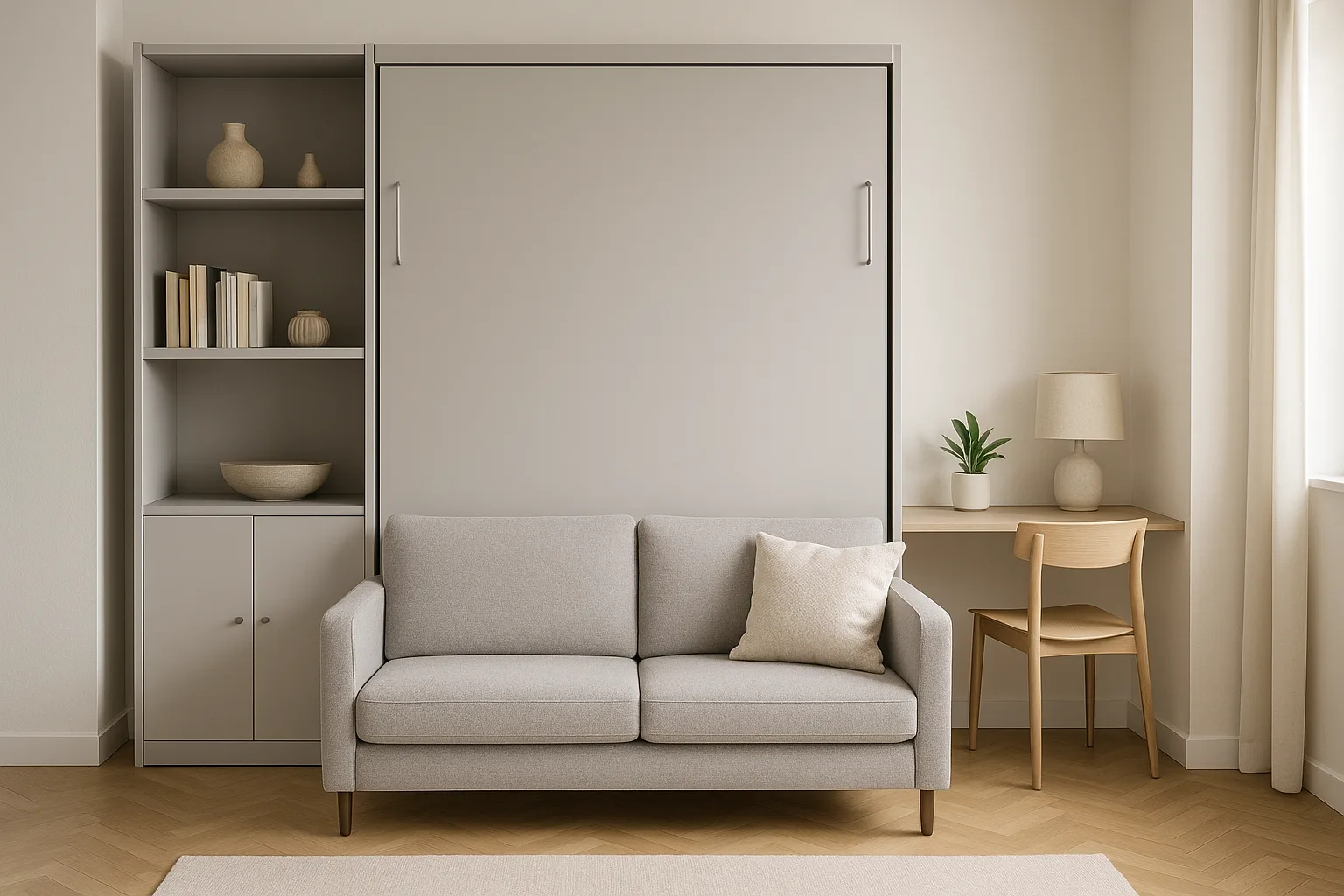
Comparing brands, styles, and flat-pack vs custom murphy bed solutions
The creator’s brand notes at 7:10–8:00 provide a good framework: compare build quality, mechanism type, warranty, price, flat-pack availability, and ease of assembly when evaluating brands.
Brand scorecard (short):
- Bestar: reliable mass-market build, piston options, 1–5 yr warranty on parts, price mid-range. Pros: parts availability; cons: limited custom finishes.
- Large retailer brands: lower price band, flat-pack common, warranties 1–3 yrs. Pros: cheap; cons: less durable hardware.
- Boutique makers: custom finishes, longer warranties, higher price (1.5–3× off-the-shelf). Pros: integration and finish; cons: lead time and cost.
Flat-pack furniture facts: typical savings are 20–40% lower price versus prebuilt units; assembly time ranges from 2–6 hours for basic units and up to 8+ hours when you factor in cabinetry. Flat-pack is not recommended when walls are masonry-heavy or when you lack basic DIY skills.
Custom murphy bed benefits: they integrate with cabinetry, match finishes, and can boost resale value; cost delta is significant — expect 1.5–3× the cost of off-the-shelf models as a rule of thumb. The creator points out which styles fit different interiors at 3:30–4:00, showing modern, transitional, and traditional staging.
Step-by-step brand selection:
- Decide mechanism preference (spring vs piston) — prioritize piston for daily use.
- Check part availability and warranty length.
- Read at least user reviews and watch video timestamps where hands-on impressions are given.
- Request AR previews or in-room mockups when buying custom units.
Practical tip: if you want the look of built-in cabinetry without custom cost, buy a flat-pack cabinet unit with upgraded hinges and a piston mechanism and have a local carpenter fit the finish panels — this often hits a good middle ground between price and integration.
Installation tips & a DIY murphy bed checklist
The creator covers core installation steps at 9:00 but keeps it brief — here is a detailed, step-by-step plan you can follow.
Step-by-step installation plan:
- Measure & mark studs: use a reliable stud finder; mark centers and measure spacing.
- Check wall material: drywall over studs or solid masonry; if masonry, plan for expansion anchors and consider pro help.
- Assemble cabinet on floor: build the box flat to avoid stress on joinery; follow the manual’s torque specs.
- Attach mechanism to frame: install springs or pistons per manufacturer instructions; don’t fully tension springs until frame is mounted.
- Secure to wall: use lag bolts into studs (recommended fasteners); minimum stud penetration should be 1.75–2.5″ into the stud material for secure anchoring.
- Install mattress and test: check open/close cycles, locking mechanisms, and adjust tension as needed.
Safety data & specifics: recommended fasteners are heavy-duty lag bolts sized to the manufacturer’s spec (commonly/8″ or/2″). Avoid mounting solely to drywall anchors — the creator warns about this at 9:45.
Verifiable facts: typical installation time for a 1–2 person team on flat-pack units is 2–6 hours. A typical queen unit weight ranges from 100–200 lbs. Essential tools: drill, level, stud finder, socket set, impact driver, and torque wrench.
DIY vs professional decision matrix: hire a pro if you have masonry walls, plumbing/electrical behind the mounting surface, heavy king units, or if you lack two people for safe lifting. The creator’s cautionary note at 9:45 highlights these triggers.
Troubleshooting checklist:
- If bed doesn’t lock: inspect latch alignment and tension; adjust catch plates.
- If sagging occurs: check that mattress is properly seated and frame rails are fully engaged; tighten fasteners.
- If noisy mechanism: look for loose bolts, worn pivot bushings, or insufficient lubrication on moving parts.
Installation cost estimate: hiring a local pro typically runs $150–$500 depending on region and complexity. For step-by-step parts and guides, consult Murphy Bed Depot and manufacturer manuals for your specific model.
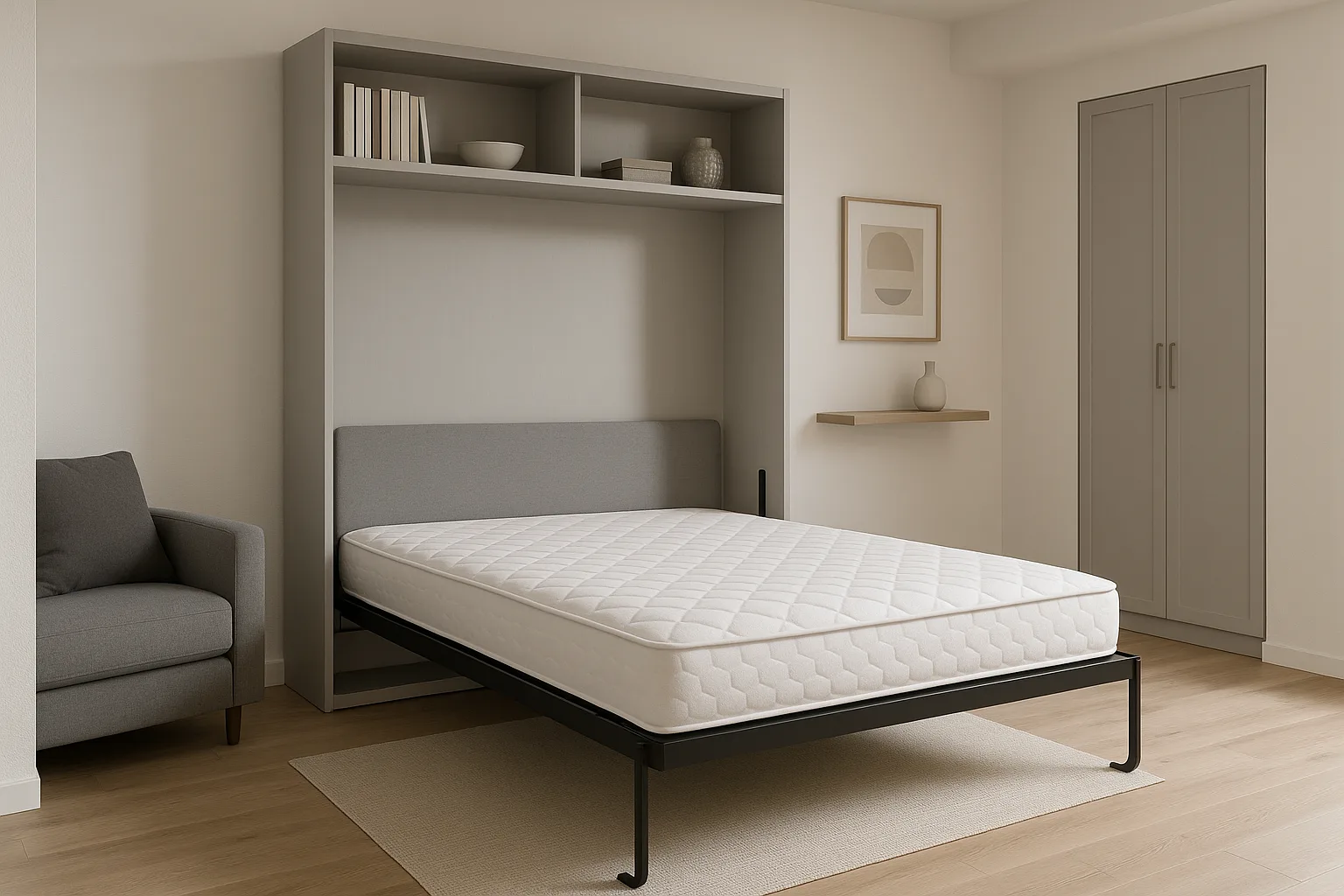
Cost-effective alternatives and flat-pack furniture strategies
The video highlights budget picks at 5:40 — here’s a more actionable approach if you want to save money without sacrificing safety or long-term value.
Economical options:
- Simple wall-mounted folding bed frames (mechanism only, no cabinetry).
- Used secondhand murphy beds — typically 30–60% below retail depending on condition and age.
- DIY wall bed kits and mechanism-only purchases paired with local cabinetry.
Two cost data points: average used murphy beds on marketplaces often sell for 30–60% below retail. Buying flat-pack instead of preassembled units commonly saves 20–40%.
Low-cost build method (step-by-step):
- Buy a high-quality mechanism only (piston preferred for long-term use).
- Source locally made cabinetry or repurpose an existing cabinet to form the facade and mounting box.
- Hire a carpenter for final fitting if your DIY skills are limited — this often costs less than buying a premium integrated unit.
Trade-offs: budget options reduce upfront cost but may have shorter warranties and lower long-term durability. Reserve them for guest rooms or low-frequency use. For daily sleeping, invest in a better mechanism — that component is the true longevity bottleneck.
Actionable buying tips: set a firm maximum budget, prioritize mechanism quality over decorative finish, inspect used units for structural cracks or rust, and request original manuals or mounting hardware photos when buying secondhand. The creator hints at these hacks mid-video (6:50) and shows examples of inexpensive builds.
Sustainability, materials, and longevity: choosing an eco-friendly murphy bed
The creator mentions materials and finishes at 8:20; this section expands on that to give you practical checks when choosing a sustainable unit.
Sustainable materials to look for: responsibly sourced solid wood or FSC-certified plywood, low-VOC finishes, formaldehyde-free adhesives, and durable metal frames. Brands that publish material sourcing pages score higher for transparency.
Verifiable certifications: look for FSC or GREENGUARD labels. Lifecycle considerations: solid wood can last 20+ years with care, while low-grade MDF or particleboard often shows wear sooner (expect a shorter usable lifespan if exposed to humidity).
User testimonial angle: in the video the creator and on-camera testing users comment on longevity at 9:30: phrases like “still solid after years” or “mechanism replacement required” give clues about real-world durability. Quote snippets: the creator calls one older unit “structurally sound but needed strut replacement” (9:30).
Action steps to verify sustainability claims:
- Ask the seller for certification documents and the wood species used in face panels.
- Request VOC data sheets for finishes, or choose low-VOC finishes by default.
- Prefer units with replaceable mechanism components rather than sealed units — this improves repairability and lifetime value.
Repairability matters: adjustable mechanisms with available replacement parts extend lifespan. The video under-emphasizes this point, but it’s critical: a replaceable piston or strut will outlast a sealed spring assembly that can’t be serviced.
Design tips: integrating a wall bed into interior design and home improvement plans
The video shows staging examples at 3:10–4:00; use those cues to plan finishes and furniture placement so the murphy bed looks intentional, not an afterthought.
Practical staging advice: match cabinet finishes to existing furniture, use integrated shelving to disguise the bed, and plan lighting so you have task light when the bed is closed and ambient light when it’s open. The creator demonstrates modern and transitional pairings at 3:30.
Measurable clearances: leave a minimum 36″ clearance in front of the bed when open for comfortable movement. If you have side cabinets or nightstands, allow an extra 3–6″ clearance per side. These numbers come from standard circulation requirements and match the room examples shown in the video.
Multi-functional room ideas:
- Pair the murphy bed with a desk that folds away or slides under the bed facade.
- Create a dedicated home office by mounting floating shelves and a fold-down desk adjacent to the bed so the room converts instantly for guests.
- Use mattress retention straps and quick-release bedding organizers to make bed setup fast.
Actionable to-do list for renovators:
- Schedule a structural inspection if you plan heavy cabinets or attachments to party walls.
- Plan rewiring early if you want outlets or lighting integrated into the cabinet face.
- Coordinate finish schedules with painters and carpenters so match and finish are consistent.
The creator explains multiple real-room examples and shows how styles pair with units — use those timestamps to recreate similar looks in your home (3:10–4:00).
FAQs — People Also Ask about murphy bed selection, installation, and use
This FAQ section pulls the most common PAA questions together with timestamped references and short, actionable answers.
Q1: Are murphy beds safe and easy to install? — Yes if you follow safety checks. See installation notes at 9:00; key steps: anchor to studs with lag bolts, test mechanism before full use, and hire a pro for masonry walls or heavy king units.
Q2: How much does a queen murphy bed cost? — Expect $800–$3,500. Factors that push price up: custom cabinetry, premium piston mechanisms, integrated lighting, and professional installation. See price examples at 0:20–1:10 and model reviews.
Q3: Can I install a murphy bed in a small apartment/condo? — Often yes. The video covers compact installs at 2:40. Check landlord permissions, choose lighter flat-pack models if needed, and prefer piston mechanisms to reduce maintenance.
Q4: What maintenance does a wall bed require? — Inspect fasteners every months, lubricate pivots yearly (per manufacturer), and test locks after seasonal humidity changes. Keep part numbers for replacement springs or struts.
Q5: How does a murphy bed compare to a sofa bed? — A murphy bed offers a better mattress surface and more reclaimed floor space; sofa beds are better for daily seating with occasional sleep. The creator’s comparison at 1:40 frames the choice around sleep frequency and seating needs.
Each answer above references relevant timestamps from the video for deeper watching and links to manufacturer manuals for installation specifics.
Resources, references, and next steps (links, manuals, and where to buy)
Primary reference: Original YouTube video from Top Best Pro — Top Best Pro — Top Best Murphy Beds Reviews. Timestamps cited throughout the article let you cross-check the hands-on footage (0:00 intro; 0:20 picks; 1:15 thesis; 3:10 staging; 4:20 mechanisms; 6:05 model reviews; 9:00 installation notes).
Manufacturer and parts links:
- Bestar — manufacturer page and product finder (video references Bestar at 6:05).
- Murphy Bed Depot — installation guides, parts, and mechanism options.
Sustainability & certification links: check FSC and GREENGUARD to validate sustainability claims and finish VOC levels.
Concrete next steps for readers:
- Pick two favorite models from the Top list and note their timestamps.
- Measure your room using the provided measuring checklist (wall width/height, studs, clearance).
- Contact the retailer and request a mechanism demo or AR preview — ask for part numbers and warranty details.
- Schedule installation or order parts; plan for a pro install if you have masonry walls or are installing a king unit.
Note about ongoing updates: prices, warranties, and model revisions can change — plan to recheck manufacturer pages and the original video channel (Top Best Pro) for updates and any recall notices before purchase.
Frequently Asked Questions
Are murphy beds safe and easy to install?
Yes — murphy beds are safe and can be DIY-installed if you follow the right steps, use proper fasteners, and anchor into studs. The creator demonstrates key safety checks at 9:00 in the video. Checklist: verify wall type (drywall vs masonry), use lag bolts into studs, confirm minimum stud penetration (1.75–2.5″), and test the mechanism before finalizing. Hire a pro if you hit masonry, plumbing/electrical behind the wall, or if the unit is a heavy king-sized build.
How much does a queen murphy bed cost?
Typical queen murphy bed systems run between $800–$3,500 depending on mechanism, cabinetry, and whether the unit is flat-pack or custom-built. The video gives examples across that range (see 0:20–1:10 and model reviews). Premium custom cabinetry and integrated lighting or outlets push the price to the high end.
Can I install a murphy bed in a small apartment/condo?
Yes, you can usually install a murphy bed in a small apartment/condo, but you must check structural constraints and landlord rules. The video addresses compact-living scenarios at 2:40. Use lightweight flat-pack models for rental units, get permission for permanent attachments, and prefer piston mechanisms if wall fastening options are limited.
What maintenance does a wall bed require?
Routine maintenance includes checking fasteners every months, lubricating pivot points once a year (follow manufacturer instructions), and testing locks and tension adjustments after seasonal humidity changes. The creator notes mechanism checks at 9:00; prioritize replaceable parts and keep the manual and part numbers handy.
How does a murphy bed compare to a sofa bed?
Compared with a sofa bed, a murphy bed gives a true mattress sleep surface and reclaims floor space when not in use. The creator compares these at 1:40: murphy bed for regular guest use or daily sleeping, sofa bed for occasional use and living-room integration. Choose a sofa bed when you need daily seating; pick a murphy bed when sleep comfort and floor space matter most.
Key Takeaways
- Murphy beds reclaim roughly 30–40 sq ft and are ideal for compact living, home offices, and guest rooms; measure before you buy.
- Choose piston mechanisms for daily use and quieter operation; springs are cheaper but require more maintenance.
- Flat-pack models save 20–40% upfront but custom units deliver better finishes and potential resale value (expect 1.5–3× cost).
- Prioritize mechanism quality and replaceable parts when buying used or budget options; always verify certifications and warranties.
- Follow the installation checklist: anchor to studs with lag bolts, allow 36″ front clearance, and hire a pro for masonry or heavy king units.